
Whole-home surge protection is a device installed at the electrical panel that intercepts excess voltage before it can travel through any circuit in the building. It covers every outlet, every hardwired appliance, and every dedicated circuit simultaneously. Unlike plug-in power bars, it does not need to be plugged in or replaced on a routine schedule. Installation by a licensed electrician is required under the Ontario Electrical Safety Code. Phaze-In Electric Ltd. installs and services whole-home surge protection for residential and commercial clients across Toronto, North York, and the GTA.
What Is a Power Surge and How Often Do They Occur in Toronto?
A power surge is a temporary increase in voltage above the standard level flowing through a home’s electrical system. Standard residential voltage in Ontario is 120V on branch circuits and 240V on dedicated circuits for large appliances. A surge occurs when voltage spikes above those levels, even briefly. The event typically lasts milliseconds, and voltage returns to normal before most homeowners notice anything unusual.
Surges in Toronto and the surrounding GTA occur more frequently than most residents expect. Toronto Hydro and Hydro One both generate transient voltage events through routine grid switching and load balancing. Power restoration following an outage, which the GTA experiences regularly during severe weather seasons, sends a voltage spike along the line as the grid reconnects. Large appliances cycling on and off inside the home create internal surges that travel back through the wiring to other connected devices. Lightning strikes, even at a distance from the property, can introduce surges through utility lines.
The cumulative effect of these events is what makes surge protection a practical rather than precautionary investment. A single catastrophic surge from a direct lightning strike can destroy connected electronics immediately. Repeated smaller surges that fall below the threshold for instant failure degrade circuit boards and internal components over months and years, shortening the effective service life of appliances and electronics in ways that are routinely attributed to normal wear rather than preventable electrical damage.
What Is Whole-Home Surge Protection and What Does It Cover?
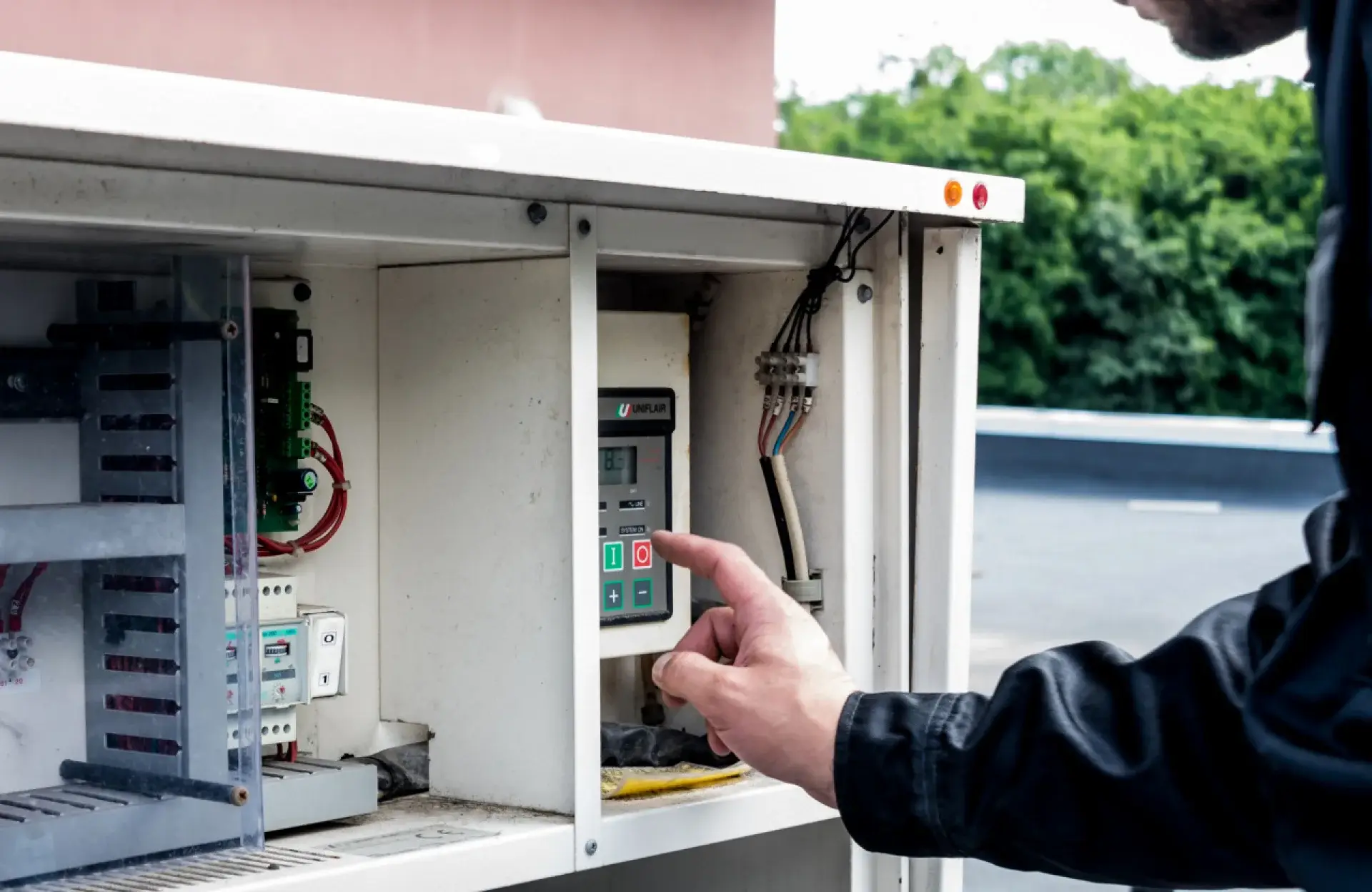
Whole-home surge protection is a surge protective device (SPD) installed at or adjacent to the main electrical panel. A surge protective device is defined and classified under Canadian Standards Association (CSA) standards as a Type 1 or Type 2 device depending on its installation location. It monitors the incoming voltage continuously and diverts any spike above the rated clamping threshold to the building’s grounding system before that excess voltage can travel along branch circuits to connected equipment.
The scope of protection is building-wide. Every outlet in every room, every hardwired appliance including the HVAC system and electric range, every dedicated circuit for an EV charger or hot tub, and every lighting circuit in the home is covered by a single installed device. This is the critical difference from plug-in power bars, which can only protect the devices directly connected to them and cannot reach any hardwired load under any circumstances.
Because the device operates at the panel level upstream of all circuit wiring, it intercepts surges at the point where they enter the building from the utility line. Surges that originate inside the home from large appliance cycling are also intercepted before they can travel back through the panel to other circuits. The protection is continuous, automatic, and requires no user action during normal operation.
How Does Whole-Home Surge Protection Compare to Plug-In Power Bars?
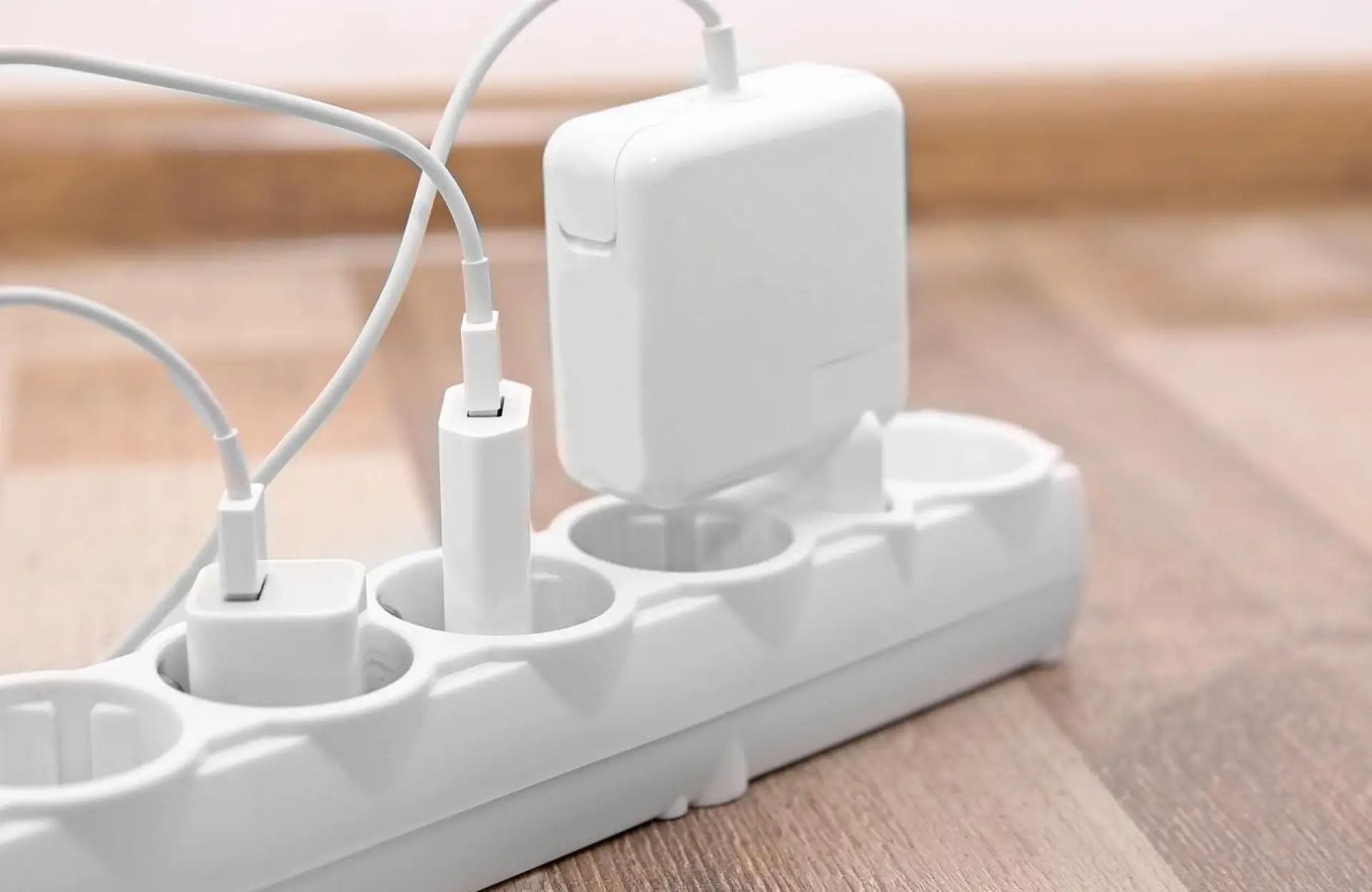
Whole-home surge protection and plug-in power bars are complementary, not competing, layers of protection. Understanding the difference between them is essential for assessing whether a Toronto home is adequately protected against the full range of surge events it faces on the GTA grid.
|
Factor |
Whole-Home SPD |
Plug-In Power Bar |
|
Installation point |
Main electrical panel |
Wall outlet |
|
Coverage |
Every circuit and hardwired load |
Plugged-in devices only |
|
Protects hardwired appliances |
Yes |
No |
|
Protects EV charger circuit |
Yes |
No |
|
Protects HVAC system |
Yes |
No |
|
Joule capacity (typical) |
1,000 to 3,000+ joules |
200 to 800 joules |
|
Depletion visibility |
Status indicator standard |
Often depletes silently |
|
Installation requirement |
Licensed electrician required |
Plug-in, no installation |
A quality power bar with surge protection is a worthwhile secondary layer for individual electronics such as computers, home theatre systems, and network hardware. It provides a final clamping stage for residual surge energy that passes through the whole-home device at a reduced voltage. Using both layers together gives the broadest practical protection across all surge magnitudes that occur on the Toronto grid.
If unexplained appliance or electronics failures have already occurred in your home, a professional assessment of surge damage to your panel and wiring is the recommended first step before adding any protection devices.
Why Do Toronto and GTA Homes Need Whole-Home Surge Protection?
Toronto homeowners face a higher-than-average surge risk relative to properties in markets with newer utility infrastructure. The Toronto Hydro and Hydro One distribution networks serve a dense urban and suburban population with electrical infrastructure of varying age. Grid switching events, which occur during routine load balancing and infrastructure maintenance, introduce transient voltage spikes across the distribution network multiple times per day. Properties in older parts of Toronto, including many North York, Etobicoke, and inner-city neighbourhoods, sit on distribution segments with aging components that are more prone to voltage irregularity.
Modern GTA homes also carry higher electrical loads than the homes these distribution networks were originally designed to serve. Electric vehicle chargers, heat pumps, smart home systems, home offices, and high-efficiency HVAC equipment all draw significant power and many of them contain digital control electronics that are more surge-sensitive than the simpler appliances they replaced. A home that has added an EV charger, a heat pump, and a smart panel upgrade in the last five years is running considerably more surge-sensitive equipment than it was a decade ago, often on an electrical system that has not been upgraded proportionally.
Homes that have added high-draw equipment without a corresponding panel assessment may be carrying more load than the existing system was rated for. Review the warning signs of an overloaded panel to assess whether the electrical system needs attention before surge protection is installed.
What Are the Signs That a Toronto Home Needs Whole-Home Surge Protection?
Several conditions indicate that a Toronto home would benefit from a whole-home surge protection assessment by a licensed electrician. Some are symptoms of existing surge activity. Others are circumstances that create elevated surge risk going forward.
- Appliances or electronics failing earlier than expected. Devices that die well before their rated service life are often experiencing cumulative voltage stress from repeated surge events rather than normal wear.
- Flickering or dimming lights. Lighting that dims or flickers when large appliances start up signals voltage instability in the home wiring, which is a consistent indicator of surge activity on the circuit.
- No surge protection currently installed at the panel. Any home where a licensed electrician has not confirmed that a panel-level surge protective device is in place should be treated as unprotected, regardless of which power bars are present.
- Recent addition of high-value equipment. New EV chargers, smart home systems, heat pumps, and panel upgrades all represent investments that benefit from panel-level surge protection from the point of installation.
- Older home with original electrical infrastructure. Pre-1990 homes in Toronto frequently lack adequate grounding, modern panel components, and any form of surge protection. These properties have the highest surge risk profile and benefit most from a full electrical assessment.
How Does the Installation of Whole-Home Surge Protection Work in Ontario?
Installing a whole-home surge protective device in Ontario is a licensed electrical installation that must comply with the Ontario Electrical Safety Code and the device manufacturer’s installation instructions. The work requires access to live panel components, connection to the panel bus bars, and confirmation that the building’s grounding electrode system provides a continuous low-impedance path to ground. This is not a task that can safely or legally be completed by a homeowner.
- Panel assessment. The licensed electrician inspects the panel type, age, available breaker capacity, and service voltage to confirm the panel can accommodate the device and to identify any preliminary work required.
- Device specification. The correct surge protective device is selected based on the service voltage, amperage, CSA certification, and joule rating appropriate for the property’s surge exposure and connected load.
- Grounding verification. The grounding electrode system is confirmed to be continuous and correctly rated. Many older Toronto homes require a grounding upgrade before a surge protective device can be installed to code.
- Installation and panel connection. The device is mounted at or adjacent to the panel enclosure and connected to the bus bars through a dedicated breaker slot or direct bus connection, depending on the device design and the panel configuration.
- Permit and ESA inspection. Where required, an Electrical Safety Authority permit is pulled and the installation is scheduled for inspection. Phaze-In Electric manages the full permit and inspection process as part of every installation.
- Status confirmation. The homeowner is shown the device’s status indicator and instructed on what it confirms about active protection and when to schedule a follow-up inspection after a major surge event.
If the panel assessment identifies that available capacity or panel age is a concern, a panel upgrade can be completed as part of the same project before surge protection is installed.
When Is the Best Time to Install Whole-Home Surge Protection in Toronto?
The best time to install whole-home surge protection in a Toronto home is during any planned electrical project that requires the panel to be de-energised and assessed by a licensed electrician. Combining surge protection installation with another project reduces total labour cost, limits the number of permit applications and inspection visits required, and ensures the protection is in place from the moment the upgraded system is commissioned.
- During a panel upgrade. An electrical panel upgrade is the most natural opportunity to add whole-home surge protection. The grounding system is assessed and updated as part of the upgrade, and the panel is already de-energised for the work. Adding a surge protective device at this stage adds minimal time and cost to a project already underway.
- During an EV charger installation. EV charger installations involve a licensed electrician assessing the panel for available capacity and circuit configuration. This assessment identifies any panel limitations and is the right moment to install surge protection that will cover the new charger circuit and all existing circuits from the same visit.
- During a service upgrade. Increasing service capacity from 100 to 200 amps or higher increases the property’s exposure to grid-level surges proportionally. A surge protective device sized for the upgraded service is a standard complement to any service capacity increase.
Homeowners planning to increase their electrical capacity can review what a service upgrade involves and how surge protection fits into that project scope.
How Should Whole-Home Surge Protection Devices Be Maintained and Replaced?
A whole-home surge protective device does not require routine maintenance in the same way a mechanical system does. The device operates passively and continuously without any user action. However, it does have a finite surge absorption capacity measured in joules, and that capacity decreases with each surge event the device absorbs. Once the cumulative absorbed energy reaches the device’s rated joule limit, the MOV components inside are exhausted and the device no longer provides protection, though it continues to pass power normally.
Most quality whole-home surge protective devices include a status indicator light that changes state when protection capacity is exhausted. Phaze-In Electric specifies devices with active status indicators for every residential and commercial installation, and shows the homeowner how to read the indicator during the installation visit. A device whose indicator shows depleted status should be replaced by a licensed electrician before the next storm season.
Following any major surge event, such as a direct lightning strike near the property or a significant grid restoration event after an extended outage, the device should be inspected even if the indicator still shows active status. A single very large surge can exhaust a device’s remaining absorption capacity in a single event without immediately triggering the depletion indicator on all device models.
Phaze-In Electric includes surge protector condition checks as part of its routine electrical assessments for residential wiring clients across Toronto, North York, Etobicoke, Vaughan, and Mississauga.
Does Whole-Home Surge Protection Require a Permit in Ontario?
In most cases, yes. Installing a permanent electrical device at the main panel in Ontario constitutes a regulated electrical installation under the Ontario Electricity Act and requires an Electrical Safety Authority permit in most municipalities, including Toronto and the surrounding GTA. The permit triggers a mandatory inspection of the completed installation by an ESA inspector before the system is considered fully approved.
The licensed electrician performing the installation is responsible for determining the permit requirement, pulling the permit from the ESA, completing the installation to code, and scheduling the inspection. Homeowners are not required to manage any part of this process when working with a licensed electrical contractor. Phaze-In Electric handles the full permit and inspection process for every whole-home surge protection installation it completes across the GTA.
Unlicensed installation of a surge protective device, whether by the homeowner or an unlicensed individual, is a violation of the Ontario Electrical Safety Code. Beyond the code violation, an uninspected installation may void homeowners insurance coverage for electrical damage and reduce the effectiveness of the protection if the device is incorrectly connected or the grounding path is not confirmed.
Browse common questions about electrical permits and surge protection requirements across Toronto and the GTA, or contact Phaze-In Electric to discuss your specific property.
Whole-Home Surge Protection in Toronto With Phaze-In Electric
Whole-home surge protection is one of the most practical and cost-effective electrical installations available to Toronto homeowners. A single device at the main panel covers every circuit, every hardwired appliance, and every dedicated system in the building simultaneously. It operates continuously, requires no user action, and provides protection against the full range of surge events that occur on the GTA grid throughout the year.
Phaze-In Electric Ltd. is a licensed, ESA-registered electrical contractor led by master electrician Andrew Spano. Andrew holds his red-seal certification from 2012 and his master electrician license from 2015, with over 15 years of residential and commercial trade experience. Phaze-In Electric serves homeowners, property managers, and commercial building owners across Toronto, North York, Etobicoke, Vaughan, Markham, Richmond Hill, Stouffville, Mississauga, and Oakville.
Every whole-home surge protection project starts with an honest assessment of the existing electrical system, a clear explanation of what is recommended and why, and a firm quote before any work begins. Permits are pulled and inspections are scheduled as part of the standard project scope. Call 416-427-4567 to arrange a consultation.
Schedule a whole-home surge protection consultation through contact and booking with Phaze-In Electric, serving Toronto and the full GTA.
Frequently Asked Questions
1. What is whole-home surge protection and how does it work?
Whole-home surge protection is a surge protective device (SPD) installed at the main electrical panel that intercepts voltage spikes before they can reach any circuit in the building. It uses metal oxide varistors (MOVs) to detect excess voltage and divert surplus energy to the building’s grounding system in nanoseconds. The process is automatic, requires no user action, and covers every outlet, hardwired appliance, and dedicated circuit in the home simultaneously.
2. How is whole-home surge protection different from a plug-in power bar?
A whole-home surge protective device is installed at the main electrical panel and covers every circuit and hardwired system in the building. A plug-in power bar covers only the devices connected directly to it and cannot reach any hardwired appliance such as a central air conditioner, EV charger, or electric range. Whole-home protection is the primary layer. A quality surge-rated power bar is a worthwhile secondary layer for individual high-value electronics, but it is not a substitute for panel-level protection.
3. Does whole-home surge protection require a permit in Ontario?
Yes. In most cases, installing a permanent surge protective device at the main electrical panel in Ontario requires an Electrical Safety Authority permit and a mandatory inspection. The licensed electrician managing the project is responsible for the permit application and inspection scheduling. Phaze-In Electric Ltd. manages the full permit process for every whole-home surge protection installation it completes across Toronto and the GTA. Unlicensed installation is a code violation and may void homeowners insurance coverage.
4. When is the best time to install whole-home surge protection in a Toronto home?
The most cost-effective time to install whole-home surge protection is during a planned electrical project such as a panel upgrade, EV charger installation, or service upgrade, when the panel is already de-energised and assessed by a licensed electrician. However, whole-home surge protection can be added to an existing compatible panel as a standalone project at any time. Phaze-In Electric can assess panel compatibility during a same-day consultation and complete the installation in a single visit where conditions permit.
5. How long does a whole-home surge protective device last?
A whole-home surge protective device does not have a fixed expiry date. Its effective service life is determined by the total surge energy it has absorbed relative to its rated joule capacity. A device with a status indicator shows when its protection capacity has been exhausted. Most quality whole-home devices rated at 1,000 joules or higher provide several years of service in typical GTA surge conditions. Following a major surge event, the device should be inspected by a licensed electrician even if the indicator still shows active status.
6. Can Phaze-In Electric install whole-home surge protection in North York and the GTA?
Yes. Phaze-In Electric Ltd. installs whole-home surge protection for residential and commercial clients across Toronto, North York, Etobicoke, Vaughan, Markham, Richmond Hill, Stouffville, Mississauga, and Oakville. Every installation follows the Ontario Electrical Safety Code, uses CSA-certified devices, and includes the full permit and ESA inspection process. Visit the Phaze-In Electric website to arrange a whole-home surge protection consultation.
Ready to Install Whole-Home Surge Protection in Your Toronto Home?
Phaze-In Electric Ltd. serves residential and commercial clients across Toronto, North York, Etobicoke, Vaughan, Markham, Richmond Hill, Stouffville, Mississauga, and Oakville. Visit contact and booking to schedule your installation.
Key Takeaways
- A power surge is a temporary voltage spike above standard supply levels. Surges occur multiple times daily on the GTA grid from utility switching, restoration events, appliance cycling, and lightning, and most go completely unnoticed.
- Whole-home surge protection is a panel-level device that covers every circuit, every hardwired appliance, and every dedicated system in the building simultaneously with a single installation.
- Plug-in power bars cannot protect hardwired appliances including HVAC systems, EV chargers, and electric ranges. A whole-home device is the only category that covers these loads.
- Installation requires a licensed electrician, CSA-certified equipment, and in most cases an Electrical Safety Authority permit and inspection. Unlicensed installation is a code violation.
- The best time to install whole-home surge protection is during a panel upgrade, EV charger installation, or service upgrade, when the panel is already de-energised and assessed.
- Phaze-In Electric Ltd. is a fully licensed, ESA-registered contractor providing whole-home surge protection installations for residential and commercial clients across Toronto and the GTA.