
EV chargers contain sensitive electronics that power surges can damage immediately or degrade gradually over time. Plug-in surge strips and power bars cannot protect hardwired charging equipment. Effective protection requires a panel-level surge protective device installed by a licensed electrician in accordance with the Ontario Electrical Safety Code. Phaze-In Electric Ltd. designs and installs code-compliant surge protection for residential and commercial EV charging systems across Toronto and the Greater Toronto Area.
Why Are EV Chargers in Toronto Particularly Vulnerable to Power Surges?
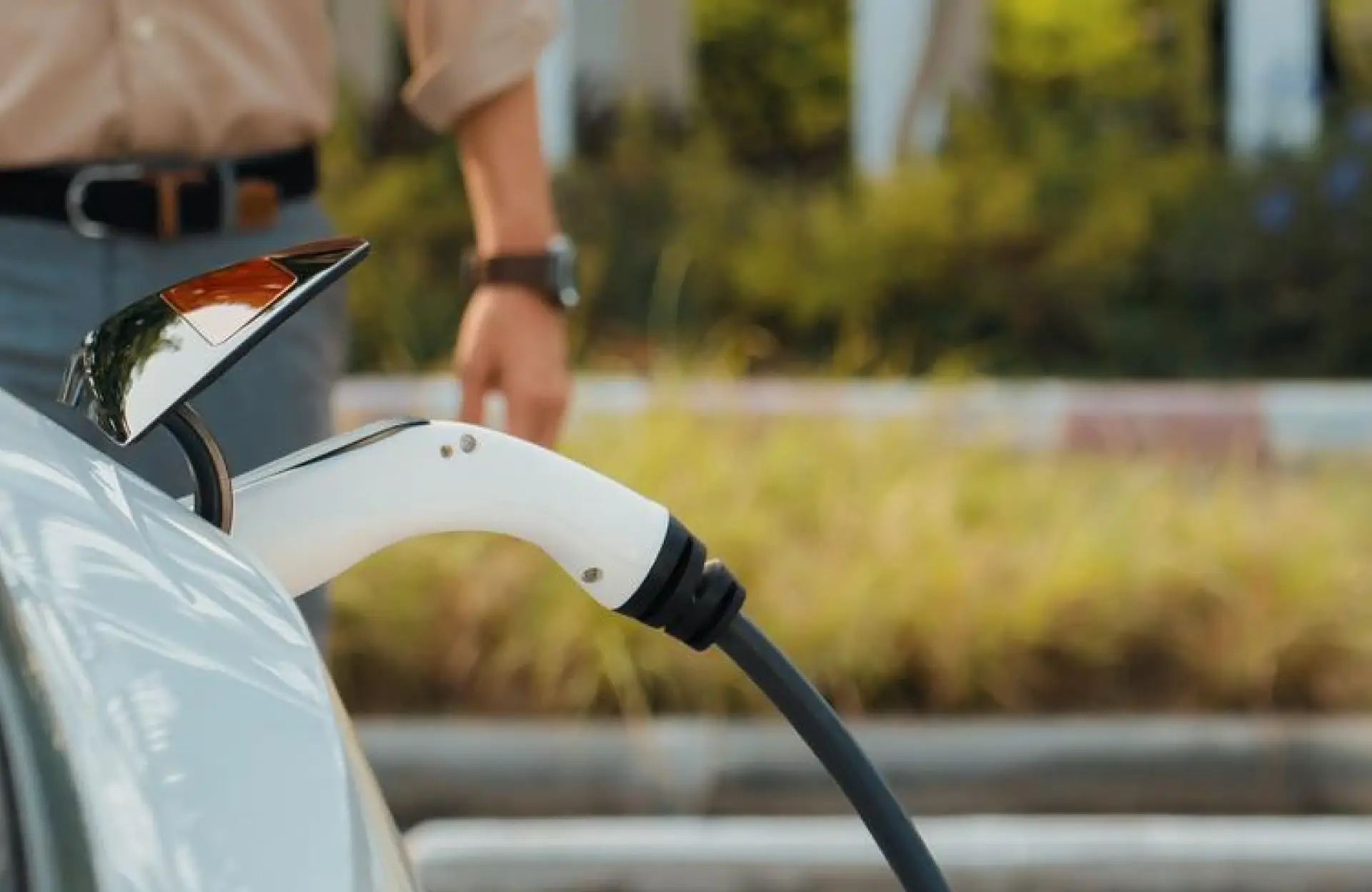
EV chargers are vulnerable to power surges because they contain sophisticated electronics that operate within tight voltage tolerances. Control boards, power management circuits, communication modules, and onboard diagnostics all function at low internal voltages well below the 240V supply the charger draws from the dedicated circuit. Any spike above the charger’s rated supply tolerance reaches those internal components directly and can cause damage that ranges from immediate failure to slow cumulative degradation.
Toronto and the surrounding GTA are exposed to surge events regularly. Utility grid switching by Toronto Hydro and Hydro One, power outages followed by grid restoration, lightning strikes during the region’s active thunderstorm season, and large equipment cycling on shared electrical services all introduce voltage spikes that travel directly through building wiring to any hardwired device on the circuit, including EV chargers installed in garages and driveways.
Older parts of Toronto, including many properties in North York, Etobicoke, and inner-city neighbourhoods, have aging electrical infrastructure that offers less natural tolerance for transient overvoltage events. Properties in these areas face a compounding risk: higher grid-level surge exposure combined with electrical systems that have less capacity to absorb those events without damage reaching connected equipment.
What Types of Surge Damage Can Affect an EV Charger in the GTA?
EV charger surge damage falls into two distinct categories, and both result in real financial and operational consequences for Toronto homeowners and commercial property owners.
- Immediate electrical failure occurs when a single large surge, typically from a nearby lightning strike or a major grid restoration event, overwhelms the charger’s onboard electronics in a single event. The charger stops functioning entirely, displays a persistent fault code, or loses power without recovering once supply is restored. In most cases, the control board requires replacement or the entire unit must be swapped, and manufacturer warranty terms for major EVSE brands consistently exclude damage from power quality events outside the specified supply range.
- Gradual performance degradation occurs through repeated smaller surges that individually fall below the threshold for immediate failure but progressively damage electronic components over months or years. This damage pattern presents as random charging interruptions, recurring error messages, reduced charging speeds, and premature equipment wear. Because no single surge event is obviously responsible, gradual degradation is frequently misattributed to a manufacturing defect or normal end-of-life wear, resulting in unnecessary replacement of equipment that was damaged by preventable electrical events.
If your EV charger is displaying recurring fault codes or stopping unexpectedly, a professional inspection of surge damage to the charger circuit and panel can identify whether voltage events are the underlying cause.
Why Do Power Bars and Plug-In Surge Protectors Not Protect an EV Charger?
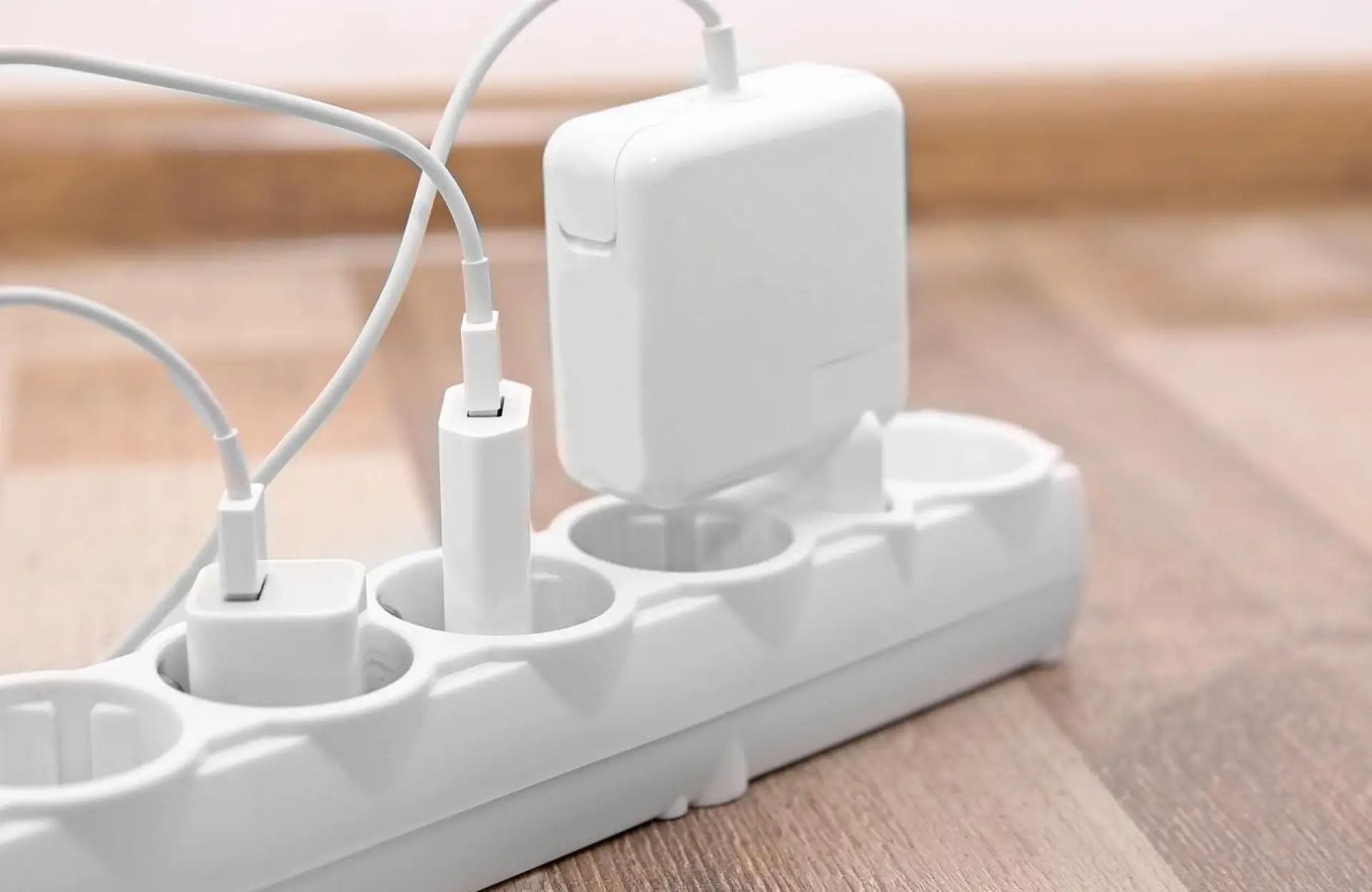
Power bars and plug-in surge protectors cannot protect an EV charger because Level 2 and higher charging equipment is hardwired directly to the electrical panel, not connected through a standard outlet. A plug-in device can only intercept voltage on the circuit path between the outlet and the device plugged into it. A hardwired EV charger has no outlet in that path, so no plug-in device can ever reach its circuit.
Beyond the hardwiring gap, there is a timing problem. The most damaging surges enter a building through the main electrical service entrance and travel through the panel to all connected circuits in nanoseconds. A plug-in surge protector installed at a wall outlet downstream of the panel would need to respond before the spike reaches the charger’s electronics. At the distances and speeds involved in a service-entrance surge event, that is not physically possible for a device at the outlet level.
Relying on plug-in surge protection for hardwired charging equipment gives a false sense of security. The equipment appears protected because a surge device is present somewhere on the property, but the EV charger circuit is entirely outside its protection zone. For Toronto homeowners and property managers with hardwired charging equipment, panel-level protection is the only category of device that reaches the charger circuit.
What Does Effective EV Charger Surge Protection Look Like?
Effective EV charger surge protection is a panel-level installation, not a product purchased off a shelf and plugged in. It requires a surge protective device (SPD) installed by a licensed electrician at the point in the electrical system that sits upstream of the charger circuit. The most common configurations for Toronto residential and commercial properties are listed below.
|
Installation Point |
What It Protects |
Best For |
|
Main service panel |
All circuits including EV charger |
Residential and small commercial |
|
Subpanel feeding charger |
Charger circuit and subpanel loads |
Detached garage subpanel setups |
|
Distribution panel |
Multiple chargers from one point |
Multi-unit and commercial properties |
|
Layered (service + subpanel) |
Broadest coverage across all loads |
High-risk and commercial installations |
The device intercepts excess voltage and diverts it to ground before it can travel along the branch circuit to the charger’s onboard electronics. It operates automatically, requires no user action, and protects the charger during every charging session, including overnight sessions when the home is unoccupied and no one is available to respond to a fault event.
Phaze-In Electric provides surge protection design as part of every EV charger panel installation for GTA homeowners, confirming the protection layer is in place from day one.
When Is Layered Surge Protection Necessary for EV Charging Installations?
Layered surge protection, meaning devices installed at more than one point in the electrical distribution path, is appropriate in situations where single-point panel protection may not provide sufficient coverage for the full charging system. Phaze-In Electric recommends a layered approach in the following circumstances.
- Commercial properties and multi-unit buildings where multiple chargers share a distribution panel and a single surge event could disable the entire charging fleet.
- Installations in buildings with large HVAC systems, elevators, or industrial equipment, where load cycling on shared electrical services introduces frequent internal surges in addition to external grid events.
- Garages or outbuildings served by a subpanel separate from the main residential panel, where the subpanel feed represents an additional surge entry point not covered by main panel protection alone.
- Properties with a documented history of frequent power outages, grid interruptions, or storm-related electrical events, where the cumulative surge frequency justifies additional protection depth.
For most Toronto residential installations with a single Level 2 charger fed directly from the main panel, a single well-specified surge protective device at the main panel is sufficient. The licensed electrician performing the installation is the right person to assess the specific property and recommend the appropriate configuration.
What Ontario Electrical Code Requirements Apply to EV Charger Surge Protection?
All surge protection devices installed in Ontario must comply with the Ontario Electrical Safety Code and the installation requirements set by the device manufacturer. Installing a surge protective device incorrectly, using components that do not meet Canadian Standards Association (CSA) certification requirements, or skipping the required grounding and bonding steps reduces the effectiveness of the protection and can cause the installation to fail inspection by the Electrical Safety Authority (ESA).
EV charger installations in Toronto typically require an ESA permit and a mandatory inspection before the charger is placed in service. When surge protection is added as part of the same project, the protection device and its installation method are included in the scope of the ESA inspection. Phaze-In Electric Ltd. manages the full permit and inspection process for every EV charger and surge protection installation it completes across the GTA.
Grounding and bonding requirements are a particular consideration for Toronto properties with older electrical systems. Surge protective devices rely on a continuous, low-impedance path to ground to redirect excess voltage safely. Many older homes and commercial buildings in Toronto lack a grounding electrode system that meets the current Ontario Electrical Safety Code standard. Phaze-In Electric assesses grounding adequacy as part of every surge protection consultation and includes any required grounding upgrades in the project scope before installation begins.
Properties with aging electrical infrastructure may require a service upgrade before surge protection can be installed to the current Ontario Electrical Safety Code standard.
What Are the Benefits of Surge Protection for Residential EV Charger Owners in Toronto?
Surge protection delivers measurable benefits for Toronto homeowners who have installed or are planning to install a Level 2 EV charger. The investment is fixed and predictable. The cost of not having protection is not.
- Equipment longevity. A whole-home or panel-level surge protector reduces the cumulative voltage stress on the charger’s onboard electronics, extending the service life of a device that represents a significant household investment.
- Reduced repair and replacement costs. Surge damage is excluded from most EVSE manufacturer warranties. Without third-party surge protection, the homeowner bears the full cost of any damage caused by grid events, including the cost of a licensed electrician’s diagnosis, parts, and replacement installation.
- Consistent, uninterrupted charging. Surge events can interrupt active charging sessions and trigger fault codes that prevent the charger from resuming without a manual reset. For homeowners who depend on overnight charging, an interrupted session means starting the next day with a partially charged vehicle.
- Whole-home protection in a single installation. A whole-home surge protector installed at the main panel protects the EV charger circuit and every other circuit in the home simultaneously, including HVAC systems, appliances, and electronics that are also vulnerable to the same grid events.
Surge protection for EV chargers is available as part of the full residential wiring services Phaze-In Electric provides to homeowners across Toronto, North York, Etobicoke, Vaughan, and Mississauga.
How Does EV Charger Surge Protection Benefit Commercial and Multi-Unit Properties?
Commercial properties, multi-unit residential buildings, and mixed-use developments face a more complex surge protection challenge than single-family homes. Multiple chargers sharing a distribution panel means a single surge event can disable the entire charging installation simultaneously. For property managers and business owners, that represents lost service availability, tenant or customer complaints, and maintenance costs that accumulate across multiple units and service calls.
Commercial properties also generate more internal surge activity than residential buildings. Large HVAC systems, elevators, industrial kitchen equipment, and shared mechanical systems all cycle on and off throughout the day, introducing voltage variations on the shared electrical service. These internal events add to the external surge exposure from the Toronto Hydro and Hydro One distribution networks, increasing the total number of voltage events that reach charging equipment over the course of a year.
For property managers, a well-designed surge protection system also reduces liability exposure. A charger that fails unsafely during a fault event in a shared or public charging environment creates liability concerns that go beyond the cost of the hardware. Code-compliant surge protection, documented through ESA permit and inspection records, is part of responsible facility management for any property offering EV charging as an amenity or service.
Phaze-In Electric designs and installs surge protection systems for commercial EV charging installations as part of its full commercial electrical services for Toronto property managers and business owners.
What Are the Warning Signs That an EV Charger Needs a Surge Protection Assessment?
Several conditions indicate that an EV charging installation in Toronto should be assessed for surge protection by a licensed electrician. Addressing these signals proactively avoids the higher cost of equipment replacement after a damaging event has already occurred.
- Recurring fault codes or charging interruptions. A charger that stops sessions unexpectedly or displays fault codes without an obvious cause is showing symptoms consistent with cumulative surge damage to its onboard electronics.
- Frequent local power outages. Properties in areas with a documented history of grid interruptions face higher surge exposure at restoration events, when utility switching introduces voltage spikes onto the line as service is reconnected.
- Aging or near-capacity electrical panel. An older panel with limited available capacity has less tolerance for transient events and may need assessment or upgrading before surge protection can be installed correctly.
- No surge protection currently installed. Any property where a licensed electrician has not assessed and confirmed that panel-level surge protection is in place should be treated as unprotected, regardless of what plug-in devices may be present.
- Additional chargers being added to the system. Expanding a charging installation increases the total electrical load and the potential impact of a surge event. Surge protection design should be reviewed before each expansion.
An aging or near-capacity panel is one of the most common reasons surge protection cannot be installed without preliminary work. Review the warning signs of an overloaded panel to assess whether your property’s electrical system needs attention first.
Installing EV Charger Surge Protection With Phaze-In Electric in Toronto
Surge protection for EV chargers is not a standalone add-on. Effective protection requires a load calculation, a grounding assessment, and a code-compliant installation designed for the specific electrical system and charging configuration of the property. This work must be completed by a licensed electrician to meet Ontario Electrical Safety Code requirements and to hold up under ESA inspection.
Phaze-In Electric Ltd. is a licensed, ESA-registered electrical contractor led by master electrician Andrew Spano. With red-seal certification obtained in 2012 and a master electrician license obtained in 2015, Andrew has over 15 years of combined residential and commercial electrical trade experience. Phaze-In Electric serves homeowners, property managers, and commercial building owners across Toronto, North York, Etobicoke, Vaughan, Markham, Richmond Hill, Stouffville, Mississauga, and Oakville.
Every EV charger surge protection project begins with an honest assessment of the existing electrical system, a clear explanation of the recommended protection configuration, and a firm quote before any work begins. Permits are pulled and inspections are scheduled as part of the standard project scope.
Browse common questions about EV charger installation and surge protection across Toronto and the GTA, or contact Phaze-In Electric directly to schedule an assessment.
Frequently Asked Questions
1. Do EV chargers in Toronto need surge protection?
Yes. EV chargers in Toronto need surge protection because the GTA electrical grid generates frequent voltage spikes from utility switching, storm events, and large equipment cycling, and EV chargers contain sensitive electronics that are directly exposed to those spikes through the dedicated 240V circuit. Most EVSE manufacturer warranties exclude surge damage, leaving the homeowner or property manager responsible for the full cost of any damage caused by grid events without third-party protection in place.
2. Can I use a power bar or plug-in surge protector to protect my EV charger?
No. Level 2 EV chargers are hardwired directly to the electrical panel and are not connected through a standard outlet. A power bar or plug-in surge protector can only intercept voltage on the circuit path between an outlet and a plugged-in device. A hardwired EV charger has no outlet in its circuit path, so plug-in devices cannot reach or protect it under any circumstances. Panel-level surge protection installed by a licensed electrician is the only device category that covers hardwired charging equipment.
3. What type of surge protection device is required for an EV charger in Ontario?
An EV charger in Ontario requires a panel-level surge protective device (SPD) installed at the main electrical service panel, a subpanel feeding the charger, or a distribution panel serving multiple chargers. The device must be CSA-certified, installed in accordance with the Ontario Electrical Safety Code, and connected to an adequate grounding system. Installation must be performed by a licensed electrician. For most GTA residential properties, a Type 2 SPD at the main panel is the appropriate and sufficient configuration.
4. Does EV charger surge protection require an ESA permit in Toronto?
Yes. In most cases, adding a permanent surge protective device to an electrical panel in Ontario requires an Electrical Safety Authority permit and inspection. This is true whether the surge protection is added as part of a new EV charger installation or as a standalone addition to an existing system. Phaze-In Electric Ltd. manages the full permit application and inspection scheduling process for every surge protection installation it completes across Toronto and the GTA.
5. How do I know if my home electrical system is ready for EV charger surge protection?
The main factors that determine electrical system readiness for surge protection are panel age and capacity, service amperage, and grounding system condition. A licensed electrician assesses all three during a site consultation. Homes on 100-amp service or with panels that have no available breaker capacity may need a panel or service upgrade before surge protection can be installed correctly. Phaze-In Electric completes this assessment as a standard first step before any surge protection project begins.
6. Can Phaze-In Electric install surge protection for commercial EV charging systems in Toronto?
Yes. Phaze-In Electric Ltd. designs and installs surge protection systems for commercial EV charging installations across Toronto and the GTA, including multi-unit residential buildings, commercial parking facilities, and mixed-use properties. Commercial installations require a load analysis and a grounding assessment before a protection configuration is specified. Reach out to us to arrange a commercial EV charger surge protection consultation with a licensed master electrician.
Ready to Protect Your EV Charger From Power Surge Damage in Toronto?
Phaze-In Electric Ltd. serves residential and commercial clients across Toronto, North York, Etobicoke, Vaughan, Markham, Richmond Hill, Stouffville, Mississauga, and Oakville. Visit contact and booking to schedule an EV charger surge protection consultation.
Key Takeaways
- EV chargers contain sensitive electronics that power surges can damage immediately through a single large spike or gradually through repeated smaller events over months of exposure.
- Level 2 EV chargers are hardwired to the electrical panel. Power bars and plug-in surge protectors cannot reach hardwired charging circuits and provide no protection for this equipment under any circumstances.
- Effective EV charger surge protection requires a panel-level surge protective device (SPD) installed by a licensed electrician at the main panel, subpanel, or distribution panel serving the charger.
- All surge protection installations in Ontario must comply with the Ontario Electrical Safety Code and CSA certification requirements, and most require an Electrical Safety Authority permit and inspection.
- Commercial and multi-unit properties benefit from layered surge protection given the higher internal surge activity from shared mechanical systems and the wider impact of a single surge disabling multiple chargers.
- Phaze-In Electric Ltd. is a fully licensed, ESA-registered electrical contractor providing EV charger surge protection for residential and commercial clients across Toronto and the Greater Toronto Area.