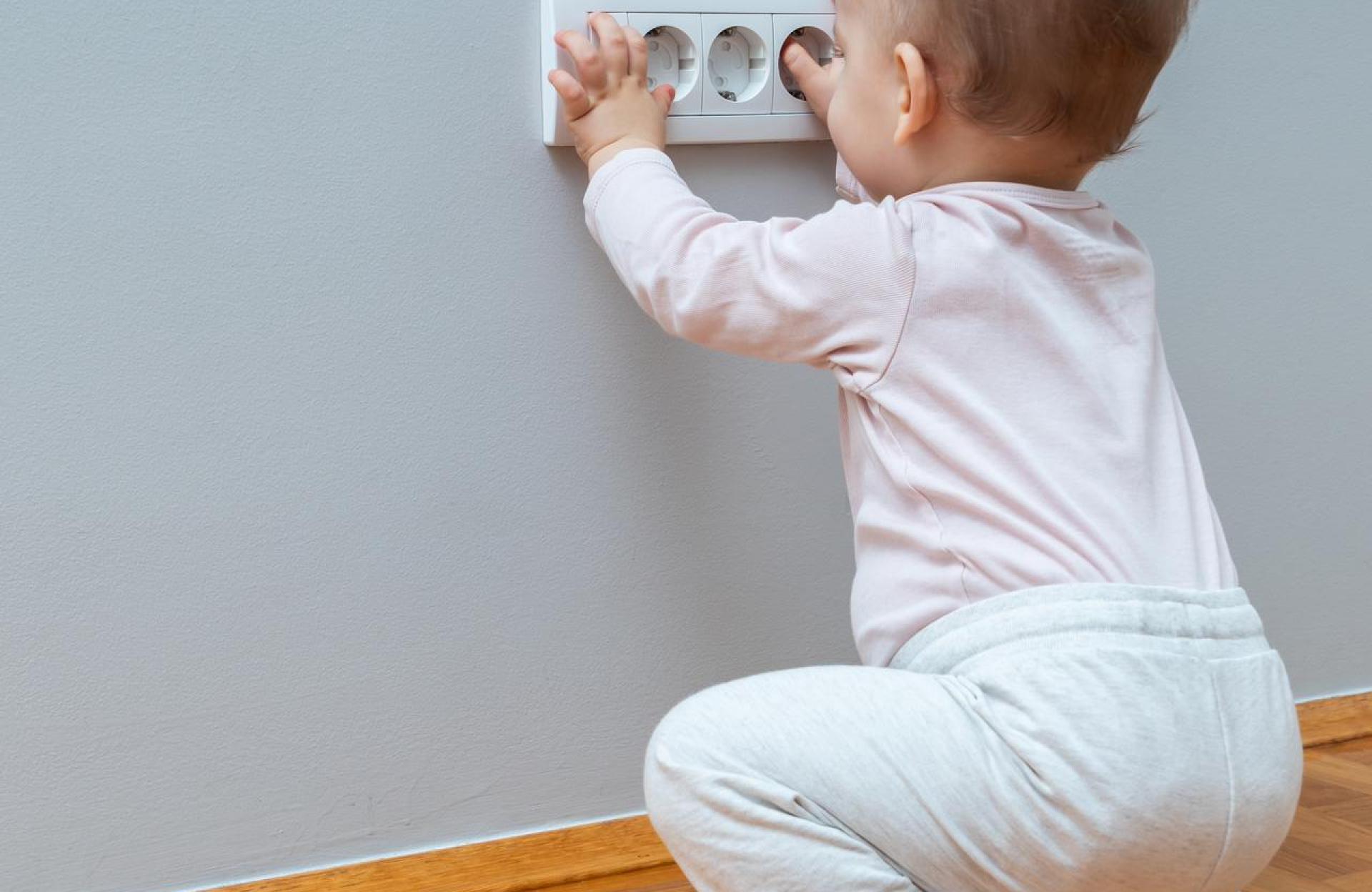

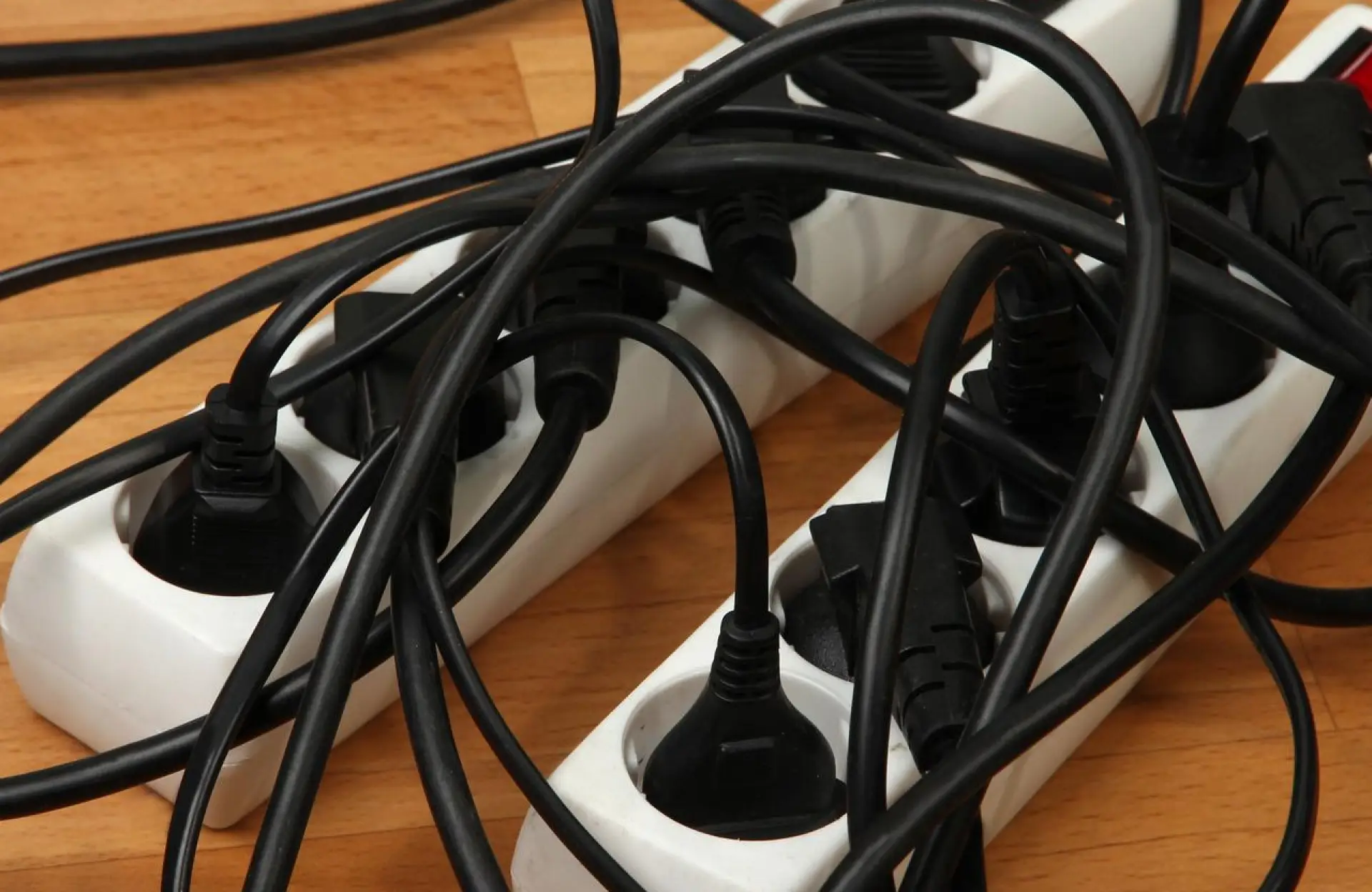
Following basic extension cord safety tips starts with one rule: extension cords and power bars are meant for temporary use, not permanent wiring. Overloading, daisy-chaining, and running cords through high-traffic areas or walls create real fire, shock, and trip hazards. If you rely on them daily, it’s usually a sign your space needs more outlets or dedicated circuits, or a panel upgrade, rather than another power bar.
Why Are Extension Cords and Power Bars Such a Widespread Electrical Safety Issue?
From home offices and home theatre setups to temporary installations in retail shops or rental work areas, it’s hard to avoid them when you need access to more plugs or face difficult outlet placement.
However, extension cords and power bars should never feel permanent. If they are part of your daily setup, ask yourself why.
As part of electrical inspections in Toronto and the GTA, Phaze-In Electric has come across many instances of extension cords being used unsafely, power bars being overloaded, and damaged cords hiding out of sight behind furniture, appliances, or fixtures.
While these risks can seem minimal or inevitable, they can lead to unnecessary fire hazards, equipment damage, and electrical shock concerns.
This guide covers extension cord safety tips and safe power bar practices to help reduce risk to your property and occupants while keeping your setup code compliant with the Ontario Electrical Safety Code.
Extension Cord Safety 101: Extension Cords vs. Power Bars
Extension cords and power bars can be used together, but there are differences between these power sources and the safety limits of each.
Extension cords provide a temporary power source from an outlet to a piece of equipment that can’t reach. Common uses include powering hand tools for short-term projects, temporary lighting in closets or storage areas, and holiday lights throughout winter months.
Power bars (also known as power strips) allow multiple pieces of equipment to plug into one outlet. Some power bars also feature surge protection, while others do not. Common uses include computer and office equipment in home offices, TVs, media streaming boxes, and audio equipment, and desktop computers in offices or retail spaces.
As convenient as these tools can be, neither extension cords nor power bars should be used as a permanent replacement for installed outlets and circuits. If you rely on them daily, it may be time to have an electrician check if your electrical system can handle your true power needs.
Top Electrical Safety Risks From Improper Extension Cord & Power Bar Use
Using extension cords and power bars incorrectly can easily create unnoticed hazards in busy homes or active workplaces.
Common hazards include equipment overheating from overloaded extension cords or power bars, fire hazards caused by damaged insulation or loose internal wiring, shock hazards created by frayed cords or missing grounding, tripping hazards when cords stretch across walking areas or stairs, and damage to electronics or appliances from low-quality power bars or inconsistent voltage.
For business owners and property managers, improper cord use can also cause problems when it comes to inspections or tenant liability. For homeowners, improper power cord use can cause insurance issues if there is an electrical incident.
Extension Cord Safety Tips to Avoid Common Hazards
Extension cords aren’t necessarily dangerous. In fact, they can be quite safe when used properly and for their intended purpose.
Choose the right extension cord for the job. Check that the cord has an indoor vs. outdoor rating, the correct wire gauge for the job, a grounded plug if you are plugging into three-prong equipment, and enough length to avoid stretching or strain. Electricians commonly find the wrong cord type during service calls and safety inspections.
Inspect extension cords prior to use. Look for cracks or splits in insulation, sections of wire becoming exposed near plug ends, misshapen plug prongs, and discoloration or melting from overheating. Any damaged cords should be thrown away. Avoid the temptation to tape up cords or try to make them work.
Keep extension cords out of high-traffic areas. Extension cords should never run across doorways, hallways, or staircases where they can become damaged or a trip hazard. Never run extension cords through walls, ceilings, door framing, or under rugs and carpets, since this can damage the cord and cause overheating because the insulation doesn’t allow heat to vent. If you need power in a location that would require an extension cord to go through your home, it likely means you should add a new outlet instead.
Safe Power Bar Usage: Do’s and Don’ts for Power Strips
Power bars can be just as ubiquitous as extension cords, but they have their own safety risks when misused.
Know your power bar’s maximum load. Every power bar is different, and overloading can cause it to overheat and fail. High-draw appliances such as space heaters, microwaves, fridges or freezers, window air conditioners, and laser printers should normally plug into the wall directly. Needing a power bar for these items is a hint your electrical system may need upgrades.
Do not daisy-chain power bars together. Plugging one power bar into another increases the risk of overload and can create heat buildup at the connection point that the devices weren’t designed to handle. This is commonly seen in offices where employees add to an existing power bar as workstation needs increase. If you need more power bars in an area, it’s usually best to add additional outlets or install a dedicated circuit.
Use surge protectors for computers and sensitive electronics. Surge-protected power bars provide an extra layer of protection but do not prevent overloading, and they wear out over time. Not all power bars provide surge protection, and cheap power bars may provide little to none. For broader coverage, see how whole-home surge protection compares to power bars.
Keep power bars accessible and cool. Avoid covering power bars under rugs, hanging them behind curtains, or storing items on top of them in closets. Install them off the floor when possible, avoid heat traps like carpeting, and ensure the reset button and cord aren’t boxed in or damaged.
When Extension Cords & Power Bars Are Covering a Larger Electrical Issue
Occasional use of extension cords and power bars is one thing. When these items become part of your everyday setup, they are often a sign that your electrical system wasn’t installed with your current usage in mind.
Common scenarios include older homes in Toronto with outdated outlet placement, adding a home office or basement finishing where outlet placement is limited, condos with unit layouts that limit power accessibility, and retail spaces that have changed over time to require more power.
As a rule of thumb, if you find yourself continually adding power bars or thinking of new places to plug in, it’s probably time to have a professional evaluate your space. Your electrician can help you determine if you need more receptacles, dedicated circuits, or an electrical panel upgrade if your current panel can no longer safely support your electrical needs.
Ontario Electrical Safety Code and Extension Cord/Power Bar Use
Under the Ontario Electrical Safety Code, extension cords and power bars are not considered permanent wiring solutions.
Homeowners might not think about code most of the time, but they do run into these issues when making renovations, having inspections, or dealing with insurance matters after an incident. Permits are typically needed for installing new outlets or switches, new electrical circuits, cutting into or modifying existing wiring, and upgrading your electrical panel.
An electrical contractor GTA homeowners and businesses trust can help you plan ahead. By knowing the ESA inspection process and understanding common renovation requirements in Toronto and the GTA, your electrical contractor can help prevent delays or rework.
Extension Cord Safety for Rental Properties & Business Spaces
Extension cords and power bars can easily become permanent solutions in business spaces since no single tenant may be responsible for the overall setup. Before you know it, cords can become tangled, overloaded, or hidden in unsafe conditions.
Property managers can help reduce this risk by periodically walking through spaces to monitor cord and power bar conditions, replacing damaged cords right away, ensuring workstations have enough outlets so power bars aren’t overloaded in shared spaces, and planning for electrical upgrades during tenant turnovers.
Working with the same commercial electrical contractor in Toronto consistently can also give your maintenance team the benefit of proactive support versus reacting to emergency calls.
Permanent Electrical Upgrades: The Best Solution for Extension Cord Overload
Outlet placement, circuit overload, and electrical panel capacity should match how you live in your home or how your business operates. When they don’t, extension cords and power bars become frequent guests.
Permanent electrical upgrades address the underlying need instead of providing a temporary fix. Common residential electrical upgrades include installing new outlets in high-traffic areas, adding dedicated circuits for office equipment or appliances, retrofitting better lighting layouts to reduce reliance on power strips, and upgrading your electrical panel for safer circuit protection.
Book a Safety Inspection With Phaze-In Electric Ltd.
Extension cords and power bars don’t have to be a safety concern in your home or business. With a little awareness and routine inspections, you can greatly reduce the chances of a dangerous incident.
Remember to choose the right tools for the job, avoid creating overloaded circuits, and know when it’s time to add outlets or upgrade your circuits.
Phaze-In Electric Ltd. is a licensed, ESA-certified electrical contractor serving North York, Toronto, and the Greater Toronto Area. Led by Master Electrician Andrew Spano, we provide residential and commercial electrical services, including panel upgrades, EV charger installations, lighting design, and code-compliant commercial electrical work.
Concerned about how power strips are being used in your space? Contact us today to schedule a consultation with a licensed electrician and learn how to stay code compliant in Toronto.
Frequently Asked Questions
1. Is it safe to leave a power bar plugged in all the time?
Power bars are designed to remain plugged in for typical low-load electronics such as TVs and computers, provided they are not overloaded, not daisy-chained with other power bars, and kept accessible and uncovered. High-draw appliances should not rely on a power bar at all.
2. Can I run an extension cord under a rug or through a doorway?
No. Extension cords should never run under rugs, through doorways, or across high-traffic areas where they can be damaged or create a trip hazard. If you need power in that location regularly, a new outlet is the safer solution.
3. How do I know if my extension cord is overloaded?
Signs include a warm or hot cord during use, a burning smell, or a breaker tripping when the cord is in use. Check the cord’s rated capacity against the combined draw of everything plugged into it, and disconnect immediately if you notice any of these signs.
4. Is daisy-chaining power bars ever acceptable?
No. Plugging one power bar into another increases overload risk and can create heat buildup at the connection that the devices were not designed to handle. If you need more outlets, add a dedicated circuit or additional receptacles instead.
5. When should I stop using extension cords and get an electrical upgrade instead?
If you find yourself continually adding power bars, running cords to reach devices, or relying on extension cords for anything other than truly temporary use, it’s a sign your outlet placement or panel capacity no longer matches how you use the space. A licensed electrician can assess whether you need more receptacles, dedicated circuits, or a panel upgrade.
Key Takeaways
- Extension cords and power bars are designed for temporary use, not as permanent wiring solutions.
- Overloading, daisy-chaining, and running cords through high-traffic areas or walls are common and serious safety risks.
- High-draw appliances such as space heaters and microwaves should be plugged directly into the wall, not a power bar.
- Relying on extension cords daily is usually a sign that a space needs more outlets, dedicated circuits, or a panel upgrade.
- Property managers should routinely inspect cord and power bar use in shared and tenant spaces to reduce liability.