
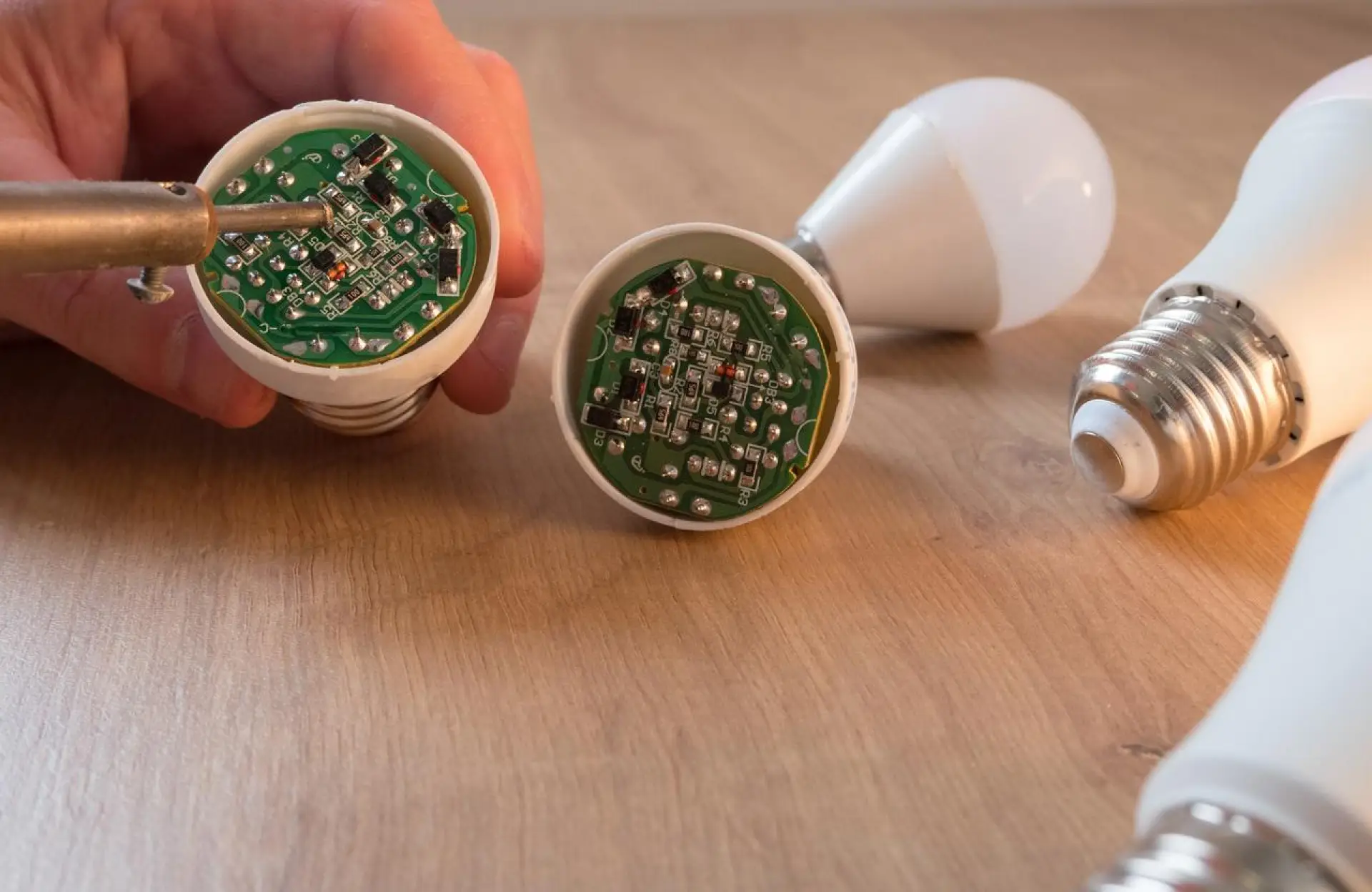
LED lighting is one of the most effective ways for Toronto homeowners and businesses to reduce energy costs without sacrificing brightness or comfort. Installed by a Toronto licensed electrician, LED upgrades use significantly less electricity, generate less heat, and last much longer than traditional lighting, improving efficiency, lowering maintenance costs, and supporting long-term electrical savings.
Why LED Lighting Outperforms Traditional Options
LED lighting is much more energy efficient than traditional incandescent or fluorescent bulbs. Homeowners and business owners in the Greater Toronto Area often find their lighting costs take up a bigger percentage of the energy bill than expected.
Old lighting technologies weren’t developed with energy efficiency in mind, which means they use more electricity, create more heat, and need replacement more often. As energy costs continue to rise across Toronto and Ontario, one of the most straightforward ways to lower ongoing operating expenses is to upgrade a property’s lighting to LED technology.
LED lighting is now the modern standard for energy-efficient lighting. This article explains how LED lighting works to reduce energy costs and covers the factors Toronto property owners need to consider when upgrading their lighting systems.
LED vs. Traditional Lighting at a Glance
| Technology | Efficiency Issue | LED Advantage |
| Incandescent/Halogen | Most energy converts to heat, not light | Higher energy-to-light conversion ratio |
| Fluorescent | Energy lost to ballasts, efficiency drops with age | Stable output, no ballast losses |
| Both (traditional) | Frequent replacement, inconsistent quality | 25,000–50,000+ hour lifespan |
How Older Lighting Technologies Waste Energy
Before getting into the benefits of LED lighting, it’s helpful to understand how traditional lighting fixtures use electricity.
Standard incandescent and halogen bulbs produce light through an inefficient process. Instead of emitting useful illumination, these fixtures convert the majority of their energy into heat. This requires more electricity to produce the same light level, the waste heat has to be vented somewhere, and these fixtures need replacement more often.
Fluorescent lighting offers some improvement over standard bulbs, but there are still downsides: energy is lost to the ballasts that power the fixtures, efficiency drops off as the lighting ages, and ballasts and tubes can flicker or have inconsistent light quality.
LED Lighting Uses Electricity More Efficiently
LED stands for light-emitting diode, which is an efficient technology for producing visible light. LEDs are more efficient because they are essentially tiny semiconductors that convert electrical energy into light. Compared to incandescent or fluorescent bulbs, LEDs have a much higher energy-to-light conversion ratio, use far less electricity to produce the same number of lumens, and generate less heat in the fixture.
LED Lighting Results in Lower Energy Consumption
The most immediate way that LED lighting can help lower energy costs is by using less electricity.
LED bulbs typically use 80 percent less energy than standard incandescent bulbs and up to 50 percent less energy than fluorescent fixtures. For commercial properties and multi-family buildings with dozens or hundreds of fixtures, the reduction in required wattage can easily add up to real monthly savings.
LED energy consumption is highly predictable and very stable over time. Unlike older lighting technologies, LEDs don’t have components that degrade and cause efficiency losses or failures. Homeowners and business owners can count on savings remaining consistent from month to month.
LEDs have a much longer lifespan and require fewer replacements, which cuts maintenance and replacement costs. An LED lighting system can last 25,000 to 50,000 hours or more before reaching the end of its operating life. This is three or more times longer than most traditional lighting options, which means reduced wear and tear and lower demand on electricians and maintenance teams.
LEDs offer better light quality and consistent illumination without higher costs. Many people don’t realise that LEDs have a higher colour rendering and can be used to create more accurate and pleasing lighting schemes. LED fixtures offer good brightness consistency and less flicker than fluorescent tubes. For residential spaces, this means more comfortable lighting and the flexibility to create effective lighting design in kitchens, bathrooms, and other task areas.
LEDs can be precisely directed, so lighting design is more efficient. Lighting professionals can use fewer LEDs to cover the same area with consistent light levels. For residential spaces, this means the ability to fine-tune the placement and type of lighting without needing larger or more fixtures.
LEDs use less electricity and produce far less heat, which is particularly important for Toronto summers. Lighting heat can represent a significant portion of the cooling load for an electrically heated home. This also explains why LEDs can last so much longer than traditional fixtures.
LEDs Place Less Demand on Electrical Circuits
Energy efficiency is not just about the fixture itself but also how that lighting affects the electrical system.
LEDs use lower wattage, which is less demanding for a home or building’s electrical wiring. This also reduces voltage drops and demand on electrical service panels. For older Toronto homes with ageing wiring, using less energy can also help extend the life of an older electrical system.
LED lighting can also be designed to work with dimmers and motion sensors. When paired with occupancy or dimming controls, LEDs will only use energy when necessary, which means even lower energy consumption.
LED Lighting in Commercial and Multi-Unit Buildings
LED lighting is often a significant part of the operating costs of commercial properties and multi-unit buildings.
LED retrofits make the biggest difference in high-use areas. Commercial buildings such as offices, retail stores, warehouses, and multi-level parking garages often operate their lighting for the majority of the day. Investing in LED upgrades for high-use areas will provide a faster return on investment and reduce long-term operating expenses. Consistent, bright illumination also improves building safety and security. Commercial lighting retrofits and installations must meet Ontario Electrical Safety Code requirements. To ensure that fixtures, wiring, and controls are installed safely and inspected properly, homeowners and businesses should work with a licensed electrician.
Residential LED Retrofits by a Toronto Licensed Electrician
LED lighting is also being adopted in Toronto residential homes at a rapid rate.
LED retrofits are often installed in kitchens and bathrooms, living areas and hallways, and basements and home offices. Energy-efficient LED lighting can help homeowners keep energy costs under control as more electrical devices are added to a property.
LED lighting is also popular for exterior and security lighting. Outdoor lighting uses far less energy with LEDs. In commercial spaces, the reduced maintenance can also be a plus in areas that see severe Ontario winters.
LED Lighting, Electrical Permits, and Your Toronto Licensed Electrician
While it’s true that some homeowners can retrofit their own LED lighting, many lighting changes and upgrades do involve electrical work that requires a professional. Depending on the scope, electrical permits may also be required. Electrical permits are usually required for the installation of new circuits, the modification of existing wiring, and the upgrading of commercial lighting systems. Electrical permits ensure that any electrical work is up to code and inspected by an electrician. A licensed electrician will be able to manage these permits and inspections and can advise homeowners about what their local Electrical Safety Authority requires.
LED Lighting as Part of an Efficiency Retrofit
LED lighting is just one step that homeowners and businesses can take to improve the overall efficiency of a building. It’s often best to coordinate LED upgrades with other electrical and building improvements.
Lighting upgrades can be done as part of a larger panel and wiring upgrade, home renovation, or electrical safety inspection. Doing this work at the same time as other home upgrades can lower the overall cost of the project, improve the system efficiency, and prepare the home for future electrical needs. A professional electrician can help homeowners and businesses coordinate these upgrades.
Choosing an Electrical Contractor to Upgrade Lighting
LED lighting and other energy-efficient solutions should be carefully planned and installed to avoid issues later. Toronto homeowners and businesses need to be sure they’re choosing a quality electrical contractor that has a commitment to safety and code compliance.
Phaze-In Electric Ltd. is a licensed, ESA-certified electrical contractor serving North York, Toronto, and the Greater Toronto Area. We provide residential and commercial electrical services, including panel upgrades and replacements, EV charger installations, lighting design, and code-compliant commercial electrical services. Led by Master Electrician Andrew Spano, our focus is on ensuring electrical safety, transparency, and high-quality work for homeowners, business owners, and property managers.
LED lighting can be an important part of a strategy to reduce a property’s energy costs. LEDs use electricity more efficiently to produce the same number of lumens, which is how lighting brightness is measured. They also generate less heat and last far longer than incandescent or fluorescent lighting, which results in lower operating costs.
If you would like to upgrade your Toronto home’s lighting, contact Phaze-In Electric for a licensed assessment. Our electricians can design an efficient and cost-effective LED lighting retrofit that meets or exceeds Ontario Electrical Safety Code requirements.
Frequently Asked Questions
- How much energy can LED lighting save compared to traditional bulbs?
LED lighting can use up to 80% less electricity than incandescent bulbs and significantly less energy than fluorescent lighting. This can lead to noticeable savings on monthly energy bills, especially in properties with extensive lighting use.
- Are LED lighting upgrades worth it for older Toronto homes?
Yes. LED lighting can reduce energy consumption, place less demand on older electrical systems, and improve lighting quality. Many homeowners choose LED retrofits as part of broader electrical upgrades or renovation projects.
- Can LED lighting help reduce maintenance costs?
Absolutely. LED fixtures and bulbs typically last much longer than traditional lighting options, which means fewer replacements, lower maintenance requirements, and reduced long-term operating costs.
- Do commercial buildings benefit from LED lighting upgrades?
Yes. Offices, retail stores, warehouses, and multi-unit buildings often operate lighting for extended hours. Upgrading to LED lighting can significantly reduce energy expenses while improving visibility, safety, and reliability.
- Do LED lighting installations require a licensed electrician?
While simple bulb replacements may not require professional assistance, many lighting upgrades involving new fixtures, wiring modifications, controls, or commercial retrofits should be completed by a licensed electrician to ensure safety and code compliance.
Ready to Lower Energy Costs? Call a Toronto Licensed Electrician
Upgrading to LED lighting is one of the simplest and most cost-effective ways to reduce energy consumption, improve lighting quality, and lower long-term maintenance expenses. Whether you’re a homeowner looking to modernize your living space or a business owner planning a commercial lighting retrofit, Phaze-In Electric Ltd. provides professional LED lighting solutions that are safe, efficient, and fully compliant with Ontario electrical codes. Call 416-427-4567 or contact our licensed Toronto electricians today to schedule an assessment and discover how much your property could save with a professionally designed LED lighting upgrade.
Key Takeaways
- LED lighting uses significantly less energy than incandescent and fluorescent lighting, helping reduce monthly electricity costs.
- LEDs produce less heat, which can help lower cooling demands and improve overall energy efficiency.
- Longer LED lifespans mean fewer bulb replacements and reduced maintenance expenses.
- LED lighting works well with dimmers, motion sensors, and smart controls to further reduce energy consumption.
- Professional installation by a licensed electrician ensures safe, code-compliant lighting upgrades for homes and businesses.