
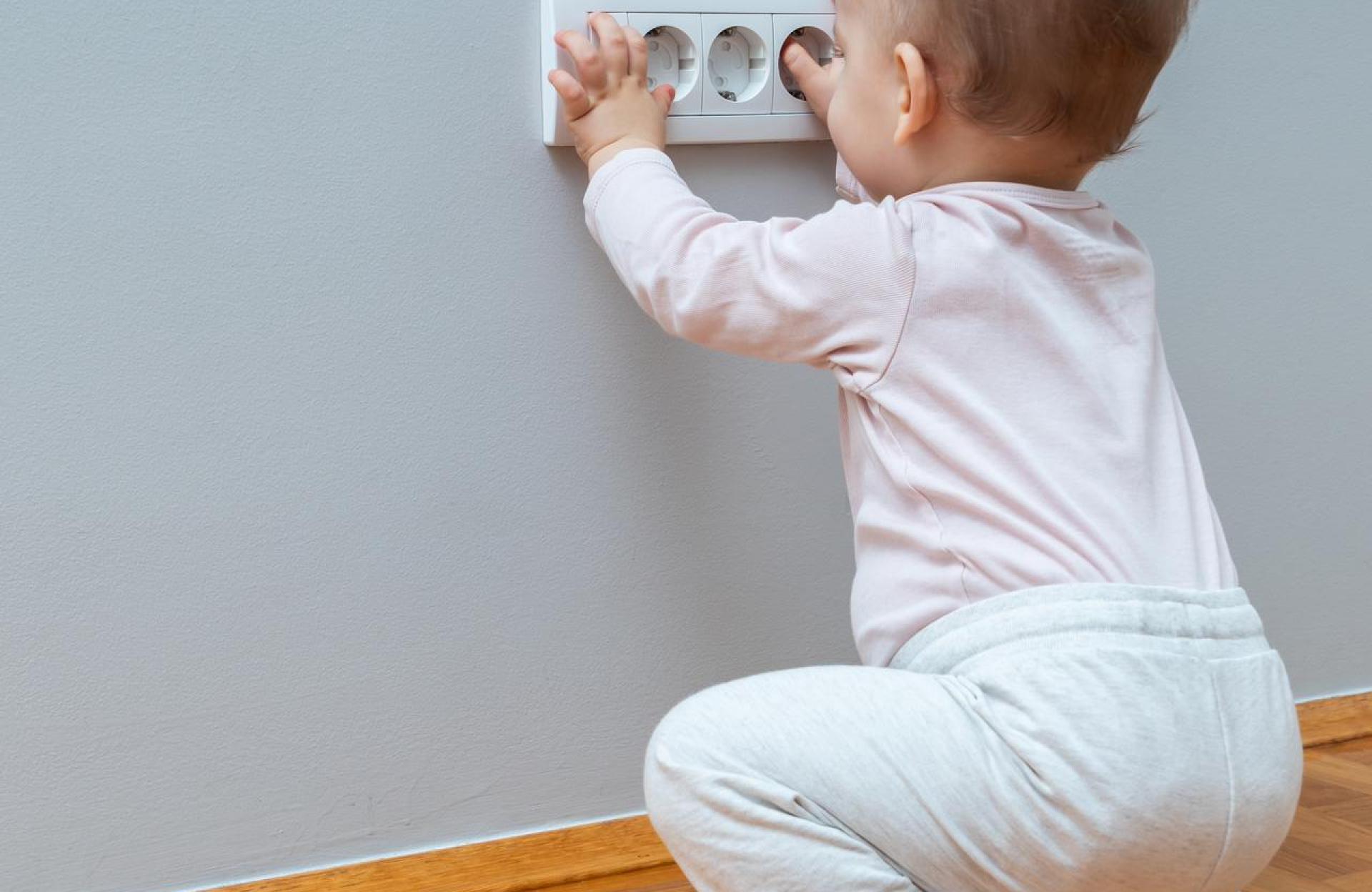
Installing childproof outlets in Toronto homes is one of the most important safety steps for families with young children. Tamper-resistant (TR) receptacles offer permanent, built-in protection and are safer than plug-in covers, but childproofing devices are not a substitute for fixing loose, ungrounded, or damaged outlets, which need a licensed electrician.
Why Should Families in Toronto Care About Outlet Safety?
Curious babies and toddlers love to explore their world by putting everything in their mouths. Outlets present a unique challenge for parents because they are accessible from the floor, located in every room, and surrounded by tempting cords, chargers, and devices.
If you have kids at home, or are planning to in the future, you may have wondered how you know the outlets in your home are safe.
Outlet childproofing is one of the most important, and misunderstood, home safety steps you can take. There are many effective products on the market, as well as a few quick fixes that don’t fully address underlying risk factors like outdated wiring or old receptacles.
This guide covers best practices for childproofing electrical outlets in your home, plus how to choose the right products for your outlets, and when it makes sense to call a licensed electrician for outlet upgrades that improve long-term safety. Choosing childproof outlets Toronto families can rely on starts with knowing the difference between a temporary cover and a permanent fix.
Should You Worry About Outlet Safety? Common Risks for Kids
Kids can get hurt around outlets in a number of ways. However, most people only consider one potential risk: object insertion.
While this is certainly dangerous, other injury hazards can lurk around outlets as well. Parents should watch out for contact hazards if kids touch the outlet or insert something inside, loose outlets that jiggle when plugging or unplugging something, worn receptacles that don’t grip plugs well and may create arcing hazards, damaged outlet covers that leave gaps around wires, and devices pulled down from counters, tables, or hanging cords.
Unused outlets in older homes may also not be grounded. Keep in mind that childproofing devices are not a replacement for upgrading ungrounded outlets or knob-and-tube wiring.
Upgrade to Tamper-Resistant (TR) Outlets for the Long Term
The safest way to protect your kids and your outlets is to install tamper-resistant receptacles, commonly referred to as TR outlets. TR outlets contain safety shutters that close off access to live electrical parts. The safety shutters open when equal pressure is applied to both sides of the outlet at the same time. This allows standard plugs to work while preventing objects from being inserted into one slot of the outlet, children from touching the receptacle once an object is removed, and “partial insertion” accidents caused by power strips or toys. TR outlets became required in new homes after several updates to the Ontario Electrical Safety Code. Today, they are a widely installed safety standard for families in Ontario.
Tamper-resistant outlets are standard practice for most homes built or renovated in recent years. If you have young children at home or plan on having kids in the future, it’s a good idea to use TR outlets wherever possible.
Many families complete outlet upgrades during renovations or before having children. If you are working with an electrician for another project, consider asking about installing TR outlets at the same time.
Using Plug Covers vs. TR Outlet Upgrade Benefits
Plug covers are small plastic devices that sit over an outlet to prevent children from inserting objects inside. While helpful for infant households, they are less effective than installing TR outlets.
Common drawbacks of plug covers include becoming easy for toddlers to remove once they learn how, becoming a choking hazard if a child removes them, and causing inconvenience for adults who need to plug something in.
TR outlets are built into the outlet itself, so there are no additional pieces to remove or lose.
How to Safely Replace Your Outlets With TR Receptacles
Outlet replacement is not complicated for a licensed electrician. After turning off power to the outlet, an electrician can safely detach the outlet from the wall and connect a new outlet in its place.
The electrician will also confirm that the outlet is mounted safely to the wall, that wires are connected correctly, and that there are no issues with the circuit behind the wall.
How to Choose Childproof Outlets in Toronto Homes
Not all childproofing products offer the same degree of safety. Homeowners should assess their wiring setup, how often outlets are used, and the age of their children before choosing outlet covers.
Best option: install tamper-resistant outlets. We recommend TR outlets whenever possible, since they protect your outlets year-round, even if you choose not to use plug inserts. Ideal situations include homes with small children or babies, families who want to future-proof their outlet safety, and rooms that use outlets frequently such as the living room or bedroom.
Recommended: use sliding outlet covers. These allow cords to slide in and out of the outlet cover, installed across the entire outlet with a plastic safety slide that covers the outlet when not in use. They work well in rentals where you cannot replace outlets, and in rooms with outlets that you do not use often. These devices can work well with proper installation but are not as durable as replacing outlets with TR receptacles.
Use with caution: plug-in outlet caps. Plug covers are better than nothing, but they do not offer complete protection. They can be useful when a child is too young to reach the outlets or remove caps, or as a short-term solution while waiting for an upgrade.
Avoid using fragile or loose plastic covers. Avoid childproofing products that do not fit snugly over the outlet or are made from cheap plastic. Covers that are easy to remove or that crack pose a choking hazard. Focus on quality when you choose childproof outlet caps or covers.
Childproofing Outlets by Room
Childproofing outlets work best when it is consistent throughout the home. Reviewing your outlet safety room by room helps ensure you don’t miss any potential hazards.
Living room outlet safety tips: install TR outlets near entertainment centres and devices, manage cords to prevent accidental tugging or tangling, and don’t overload power bars while keeping cords away from walking areas. If you use a lot of extension cords in the living room, it may be time to install a few new outlets.
Childproofing tips for bedroom outlets: kids love to explore outlets in bedrooms too, particularly if they can reach an outlet off the floor or behind furniture. Babies should not have access to cords from baby monitors or tablets either. Install TR outlets near floor level and furniture, keep computer monitors and baby monitors out of reach, and avoid cords that hang down from shelves or dressers.
Childproof kitchen outlets: kitchen outlets are high-risk because they can come in contact with water. Kitchens should have GFCI outlet protection. Any time you upgrade outlets in kitchens or bathrooms, ask your electrician to verify GFCI protection on the circuit.
Childproof outlet ideas for the basement or playroom: basements often become a playroom for families, but the outlets are typically not placed where children need them. The easiest solution is often adding a few more outlets where you need them. When finishing your basement, consider installing new outlets where needed, replacing old outlets with TR outlets, and having an electrician evaluate your panel and circuits if you haven’t had work done recently.
Outlet Safety Tests Parents Should Know
Outlet covers alone cannot make an unsafe outlet safe to use. Parents should double-check that the outlets are in good shape during childproofing.
Ask yourself: do any outlets wiggle when you plug something in? Are any wall plates cracked or damaged? Do any outlets feel warm when you touch them? Do you see sparks when plugging something in? Do you hear buzzing near an outlet or light switch?
Stop using outlets that trigger these safety checks. Move forward with repairs before childproofing outlets.
When to Consult an Electrician for Childproofing Help
Installing new outlets or replacing old outlets is not difficult for electricians. Homeowners often start with outlet covers, then call for professional help if they have an older home or want to ensure their outlets are safe.
Contact a local electrician North York and Toronto families trust if you have old outlets that aren’t TR compliant, have outlets that feel loose or are damaged, want to childproof your home before a renovation, have too few outlets and want to avoid extension cords, or wonder if your outlets comply with Ontario electrical safety codes.
If you aren’t sure, call a licensed electrician Toronto homeowners rely on for a safety assessment. Many companies offer outlet safety inspections as part of their services.
Hiring Electricians to Upgrade Your Home’s Outlet Safety
Outlet covers are a simple way to childproof your home. However, TR outlets are by far the safest option for families with small children. Both offer improved safety against electrical shock.
Upgrading your outlets also gives you peace of mind that the wiring and panels in your home are up to code. If you have any doubts about your outlets or electrical panels, hire an electrician to perform safety checks.
Phaze-In Electric Ltd. is a licensed, ESA-certified electrical contractor serving North York, Toronto, and the Greater Toronto Area. Led by Master Electrician Andrew Spano, we offer detailed outlet inspections as part of our residential electrical services, along with panel upgrades, EV charger installations, lighting design, and code-compliant commercial electrical work.
Parents Want to Provide a Safe Environment for Children
Parents want to provide a safe environment for their children, and childproofing outlets is a great way to start. Consider using tamper-resistant outlets for permanent protection against curious kids and toddlers.
Contact us today to schedule an outlet inspection or childproof your home. Let’s create a safe home you can feel confident leaving your kids in.
Frequently Asked Questions
1. What is the difference between a tamper-resistant (TR) outlet and a plug cover?
A TR outlet has built-in spring-loaded shutters that block access to live parts unless equal pressure is applied to both slots at once, offering permanent protection. Plug covers are removable plastic inserts that sit over an outlet and offer less reliable protection since they can be removed or lost.
2. Are tamper-resistant outlets required in Ontario homes?
TR outlets are required in new construction under the Ontario Electrical Safety Code and are widely recommended for existing homes, especially those with young children.
3. Can I install tamper-resistant outlets myself?
While replacing an outlet is not overly complex, it involves working with live electrical circuits and confirming correct grounding and mounting. A licensed electrician can install TR outlets safely and ensure the work meets code.
4. Are plug-in outlet caps safe to use?
Plug-in caps offer some protection but are less reliable than TR outlets since children can learn to remove them, and loose caps can become a choking hazard. They are best used as a short-term solution.
5. What outlet warning signs should I check before childproofing?
Check whether outlets wiggle when you plug something in, whether wall plates are cracked, whether outlets feel warm, whether you see sparks, or whether you hear buzzing. Any of these signs mean the outlet needs repair before childproofing, not just a cover.
Key Takeaways
- Tamper-resistant (TR) outlets provide permanent, built-in protection and are safer than plug-in covers.
- Childproofing devices do not fix underlying issues like loose, ungrounded, or damaged outlets.
- Childproofing should be reviewed room by room, since risks differ between kitchens, bedrooms, living rooms, and basements.
- Warning signs like warm outlets, sparks, or buzzing mean repairs are needed before childproofing.
- A licensed electrician can install TR outlets and confirm your home’s wiring and grounding are safe.