
Ontario exit sign requirements and emergency lighting standards are governed by three codes simultaneously: the Ontario Electrical Safety Code, the Ontario Building Code, and the Ontario Fire Code. Together, they define what must be installed, where, how it must be maintained, and what documentation inspectors expect. This page covers all three codes, common compliance failures, what triggers a permit, and how Phaze-In Electric helps property owners meet and maintain these obligations year-round.
When a power outage occurs, when a fire alarm activates, or when an evacuation is ordered, building occupants do not have time to search for a light switch or ask where the exits are. Emergency lighting and exit signs are the only illumination systems they can rely on to navigate exit routes, stairwells, and exit discharge areas safely.
Ontario exit sign requirements and emergency lighting standards are legal obligations for every building owner and property manager in Ontario. These are not optional extras and not guidelines. Failure to comply results in inspection orders, fines, and liability exposure. Phaze-In Electric works with property managers and building owners across Toronto and the GTA to assess, install, and maintain life safety lighting systems that meet all current code requirements. If your building has not had a recent emergency lighting assessment, the time to act is before your next scheduled inspection.
Why Ontario Exit Sign Requirements Carry Real Consequences
Life safety systems exist to protect people during emergencies. Ontario exit sign requirements and emergency lighting standards are enforced because non-compliance creates direct risk to building occupants. Failure to meet these requirements has documented consequences:
Failed ESA or fire code inspections that may restrict occupancy until corrections are made
- Compliance orders from fire prevention authorities requiring specific corrective action on a defined timeline
- Monetary fines issued by the Ontario Fire Marshal for documented violations
- Increased liability exposure in the event of an incident where non-compliant systems contributed to harm
If your exit signs are not illuminated at all times, or your emergency lighting does not activate during a power failure and sustain illumination for the required 30 minutes, your building is not compliant.
The Three Codes That Govern Emergency Lighting and Ontario Exit Sign Requirements
Ontario Electrical Safety Code
The Ontario Electrical Safety Code (OESC) governs every electrical aspect of emergency lighting and exit sign systems: power source selection, circuit wiring, circuit protection, battery system specifications, and testing requirements. A critical OESC requirement is that emergency lighting circuits must be kept completely separate from normal lighting circuits. Sharing circuits is one of the most commonly cited violations during ESA commercial inspections. All electrical work on these systems must be performed by a licensed electrical contractor and inspected by the Electrical Safety Authority.
Ontario Building Code
The Ontario Building Code (OBC) defines which buildings require emergency lighting, where within those buildings it must be installed, minimum illumination duration requirements, and the placement and visibility standards that apply to exit signs. These requirements are based on occupancy type, building use, and floor plan configuration.
Ontario Fire Code
The Ontario Fire Code (OFC) governs ongoing maintenance, testing, and documentation. Monthly visual inspections and annual 30-minute functional tests are required by law. Records must be retained for at least one year and made available to fire inspectors on request. The Ontario Fire Marshal administers Fire Code compliance and enforcement across Ontario, and fire inspectors regularly check emergency lighting documentation during both scheduled and complaint-driven inspections.
Which Ontario Buildings Are Affected
Emergency lighting and Ontario exit sign requirements apply broadly to commercial, industrial, and multi-unit residential buildings. Examples of building types that must comply include:
- Office buildings and professional service facilities of all sizes
- Retail stores, restaurants, and shopping centres
- Warehouses, industrial facilities, and distribution centres
- Apartment buildings, condominiums, and multi-unit residential properties
- Hotels, hospitality properties, and short-term accommodations
- Schools, healthcare facilities, and institutional buildings
Even smaller commercial spaces may require compliant emergency lighting based on occupancy load and building layout. A licensed commercial electrician Toronto property managers and owners work with can confirm the specific requirements that apply to your building and occupancy classification.
Where Emergency Lighting Must Be Installed
The Ontario Building Code requires emergency lighting to illuminate the specific areas that occupants must navigate during an emergency evacuation:
- Exit access corridors and hallways on all floors
- Exit stairwells, ramps, and stair landings
- Exit doors and exit discharge areas leading to a safe area outside the building
- Common areas in multi-unit residential buildings
- Any areas with significant changes in floor elevation along an egress route
Illumination levels are designed to allow safe movement without impairing normal vision during building operations. The goal is functional egress illumination during an emergency, not bright general lighting.
Power Requirements, Duration, and Circuit Separation
Ontario buildings must provide a minimum of 30 continuous minutes of emergency lighting illumination during a power outage. Some higher-risk occupancy types carry extended duration requirements. The Ontario Electrical Safety Code permits emergency lighting to be powered from individual battery-powered units, central battery systems, or emergency generators. Each power source type has specific installation and maintenance requirements that differ significantly.
Emergency lighting circuits must always be on separate, dedicated wiring from normal lighting circuits. This requirement is non-negotiable and consistently enforced by ESA inspectors. If your building’s emergency lighting shares circuit wiring with normal lighting, it is not compliant. Contact our expert team to assess and correct circuit separation issues before your next inspection.
Ontario Exit Sign Requirements: Placement, Visibility, and Illumination
Ontario exit sign requirements specify that illuminated exit signs must be installed:
- Above every door that serves as a required exit from the building or floor
- At every change in direction along required exit paths where the exit route is not obvious
- Wherever exits are not immediately visible from the exit access corridor
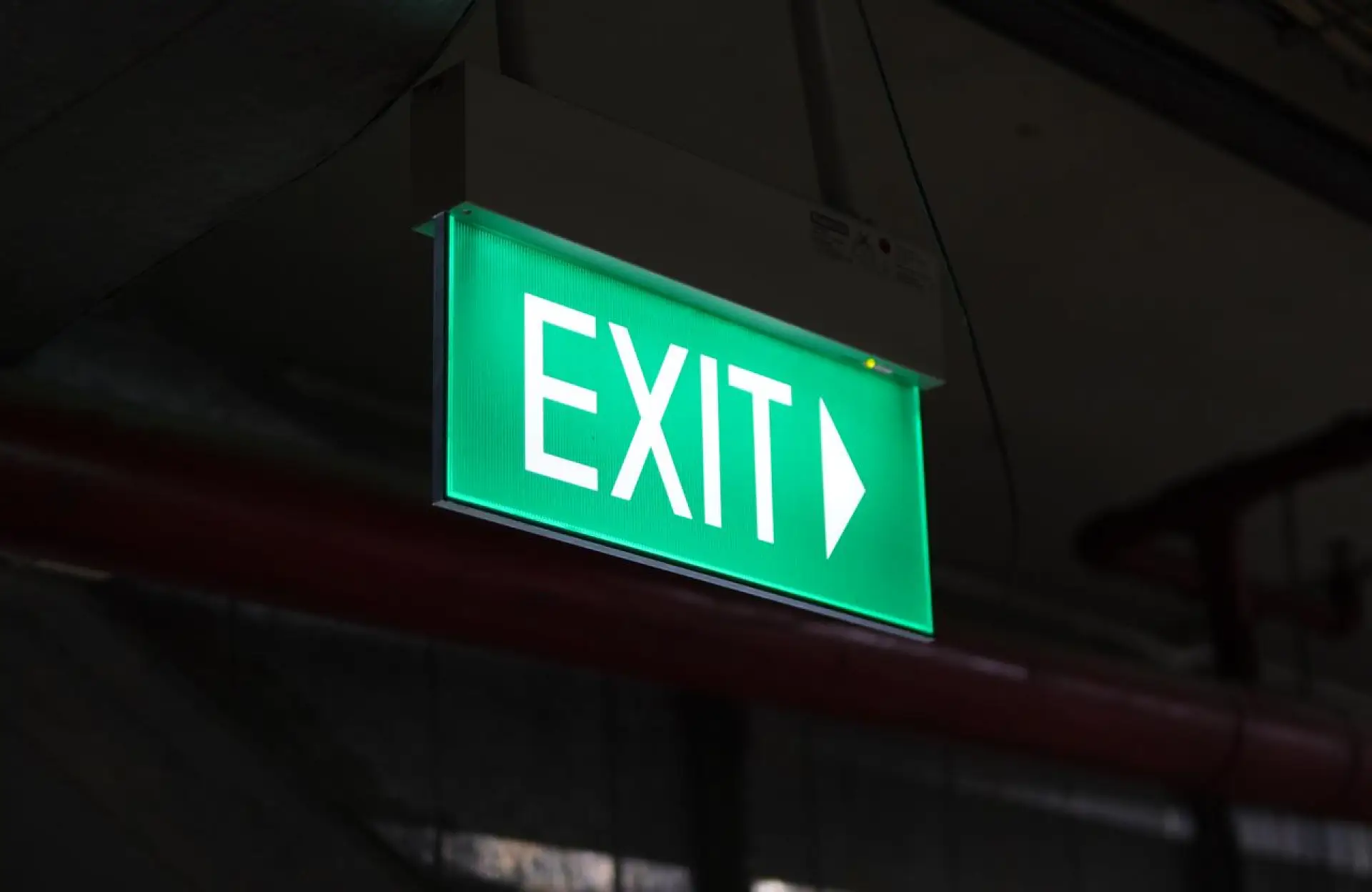
Exit signs must be continuously illuminated under all power conditions, including normal building operation. They must remain readable in smoke and low-visibility conditions. LED exit signs are the current standard for reliability, long service life, and low maintenance requirements. Directional arrows are required on any exit sign where the direction of travel to the exit is not immediately apparent.
Mandatory Testing, Maintenance, and Documentation Under Ontario Fire Code
Monthly Visual Inspections
Property owners and managers are legally required to conduct monthly visual inspections of all emergency lighting units and exit signs. Each inspection must confirm that all units are illuminated, show no physical damage, and display normal operational status indicators. Records of every inspection must be retained.
Annual 30-Minute Functional Tests
Every year, all emergency lighting systems must be tested for the full rated illumination duration, typically 30 minutes. This test confirms that battery backup systems can sustain the required illumination level for the entire emergency duration. Partial battery backup is a failure condition, not a passing result.
Documentation Requirements
All testing and maintenance records must be retained for a minimum of one year and made available to fire inspectors on request. Missing or incomplete documentation is itself a Fire Code violation, even when the physical systems are working correctly. Phaze-In Electric provides documentation support for commercial properties to ensure all testing records meet Ontario Fire Marshal requirements.
Common Emergency Lighting and Exit Sign Deficiencies Found by Inspectors
Electrical and fire inspectors regularly identify the same set of deficiencies during both scheduled and complaint-driven inspections.
Knowing what they look for lets you correct problems before they become orders:
- Dead or failing battery backup units that cannot sustain the required 30-minute test duration
- Emergency lighting circuits sharing wiring with normal lighting circuits in violation of the OESC
- Blocked, poorly positioned, or inadequately visible exit signs that do not meet OBC placement requirements
- Illumination levels below the minimum required by the Building Code
- Missing, incomplete, or undated monthly inspection or annual test records
Routine maintenance and working with a licensed electrician Toronto property managers rely on to manage these systems proactively prevents every item on this list.
Permits Required for Emergency Lighting Work in Ontario
Most emergency lighting and exit sign work in Ontario requires ESA permits and inspections. Permit-required scopes of work include: installation of new emergency lighting units, LED exit sign conversions, generator or central battery system installation, and rewiring or modification of emergency circuits. A licensed electrical contractor manages the full permit and inspection process, ensuring all work meets current code and is completely documented. Unpermitted work on life safety systems creates serious liability exposure that no property owner should accept. Also see our residential services if your portfolio includes mixed-use buildings with residential emergency lighting obligations.
Meet Ontario Exit Sign Requirements Before Your Next Inspection
Ontario exit sign requirements and emergency lighting standards are not areas where partial compliance is acceptable or enforcement is lenient. They are in place because properly functioning life safety systems save lives. Property owners who treat these obligations as a set-and-forget installation rather than an ongoing maintenance responsibility create risk that inspectors are trained to find.
Phaze-In Electric Ltd. is a licensed, ESA-certified electrical contractor serving North York, Toronto, and the GTA. Our Master Electrician-led team assesses emergency lighting and exit sign systems against current Ontario requirements, corrects all deficiencies, manages ESA permits and inspections, and provides the documentation that satisfies both ESA and fire code inspectors. Contact the Phaze-In team to schedule a compliance assessment for your building before your next scheduled inspection.
Frequently Asked Questions
1. What are the Ontario exit sign requirements for commercial buildings?
Ontario exit sign requirements are defined by the Ontario Building Code and require continuously illuminated exit signs above all required exit doors, at changes of direction along exit paths, and wherever exits are not directly visible. Signs must remain readable in smoke conditions and include directional arrows where the exit direction is not obvious. All exit sign installation and circuit work must comply with the Ontario Electrical Safety Code and be permitted through the Electrical Safety Authority.
2. How often must emergency lighting be tested in Ontario?
The Ontario Fire Code requires monthly visual inspections and annual 30-minute full-duration functional tests for all emergency lighting systems. All results must be documented and records retained for at least one year. The Ontario Fire Marshal administers these requirements, and fire inspectors check documentation during both scheduled inspections and complaint-driven site visits.
3. Does my small commercial business need to comply with Ontario exit sign requirements?
Yes. Ontario exit sign requirements apply to most commercial occupancies regardless of size. Even small commercial spaces may require compliant emergency lighting and exit signs based on occupancy load and floor plan layout. A licensed commercial electrician in Toronto can confirm the specific requirements for your building and occupancy classification.
4. What happens if my building fails an emergency lighting inspection in Ontario?
Depending on the severity and nature of the deficiency, consequences can include a formal compliance order requiring correction before the next inspection, monetary fines from fire prevention authorities, or in serious cases, restrictions on building occupancy. Maintained monthly inspection records, completed annual functional tests, and working with a licensed electrician for system changes are the most reliable way to stay compliant and avoid enforcement.
5. What does a Phaze-In emergency lighting compliance assessment include?
A Phaze-In assessment reviews every emergency lighting unit and exit sign in your building against current OBC placement requirements, OESC circuit specifications, and Ontario Fire Code maintenance standards. We identify all deficiencies, provide a written corrective work report, and manage the full scope of corrective work including ESA permits and final inspection.
Get Your Emergency Lighting Assessed by Phaze-In Electric
Do not wait for a failed inspection to find out your building has emergency lighting or exit sign deficiencies. Phaze-In Electric Ltd. is a licensed, ESA-certified commercial electrician Toronto and GTA property owners rely on for life safety system assessments, installations, and ongoing compliance support. Our Master Electrician-led team manages the full scope from system assessment through ESA permits, corrective work, and final documentation. Contact the Phaze-In team to book a comprehensive compliance review today.
Key Takeaways
- Ontario exit sign requirements and emergency lighting standards are governed by three codes simultaneously: the Ontario Electrical Safety Code, the Ontario Building Code, and the Ontario Fire Code.
- Emergency lighting circuits must always be kept on dedicated wiring separate from normal lighting circuits. Sharing circuits is a direct OESC violation and one of the most commonly cited deficiencies.
- The Ontario Fire Code requires monthly visual inspections, annual 30-minute functional tests, and documented records retained for at least one year, all subject to inspection.
- Most commercial, industrial, and multi-unit residential buildings in Ontario must provide compliant emergency lighting and continuously illuminated exit signs as a legal requirement.
- All emergency lighting and exit sign installation, circuit work, and modification requires ESA permits and must be performed by a licensed electrical contractor in Ontario.